
contra danse
- noun
- /ˈkɒntrə dɑːns/
- US
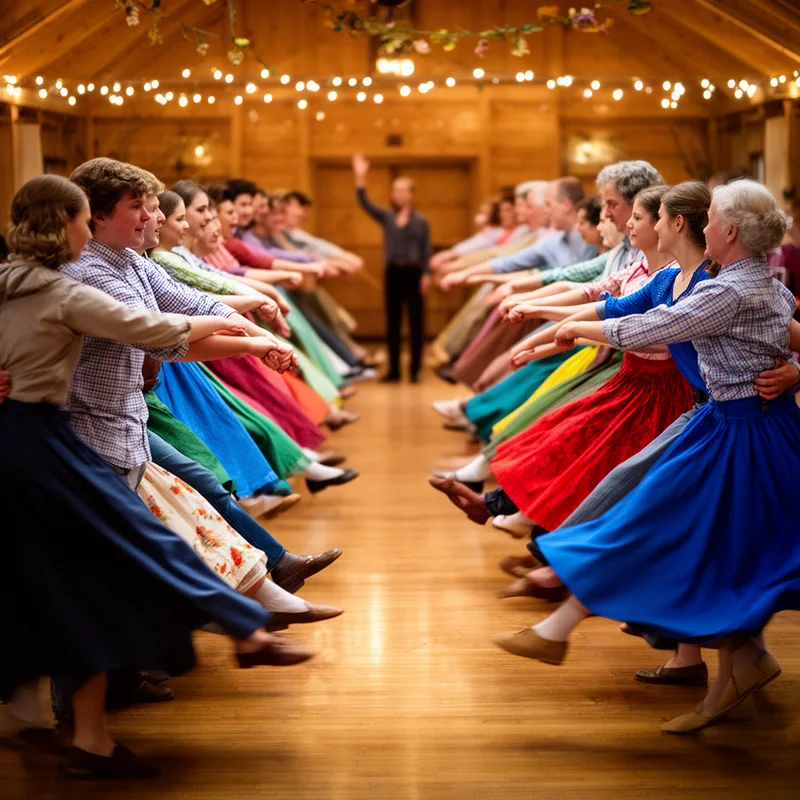
- At the festival, dancers formed two long lines for a traditional contra danse.
Examples
-
The group spent the evening learning a lively contra danse from the instructor.
-
Many communities host regular contra danse events open to all ages.
-
The contra danse was lively and full of energy.
-
Did you enjoy the contra danse last night?
-
At the festival, dancers formed two long lines for a traditional contra danse.
-
Many communities host regular contra danse events open to all ages.
-
The group spent the evening learning a lively contra danse from the instructor.
Synonyms


 1
3.3
1
3.3
A traditional group dance where couples face each other in lines and do the same steps to folk music

A lively folk dance with couples in lines doing set steps

A traditional folk dance where couples stand in sets or lines and do the same steps to music
Surface Forms
Morphology
contra + danse
Although the constituents are non‑standard English borrowings, a learner who knows 'contra' (against/opposite) and 'danse' (dance) can infer this refers to a kind of dance involving opposing lines or partners; cross‑linguistic cognates (e.g. Spanish/French forms) support that inference. However, the precise cultural/folk‑dance conventions (sequence of figures, formation) are specialized and not fully predictable from the parts alone, so full understanding requires prior exposure.
Etymology
Contra danse comes from the French parts contra and danse, meaning something like 'opposite dance' because couples stand in two long lines facing each other. That's why contra danse now refers to a folk dance where people follow a series of steps while moving up and down the lines.