

connective
 11
5.6
11
5.6

- adjective
- /kəˈnɛktɪv/
- Such aesthetic registers accord with a revolutionary rhetoric of liberty and a connective, democratic political vision.
- connective tissue
- connective tissue disorder
- connective elements
Loading YouTube…
Watch on YouTubeLike, and it's it's good to laugh and laughter can feel as, to me as connective as crying with someone, as being intimate with someone.
- Like, and it's it's good to laugh and laughter can feel as, to me as connective as crying with someone, as being intimate with someone.
- It builds the connective tissue of healthy societies.
- And that's the real heart and connective tissue that makes it all come together.
- So the the blog was both jet fuel and bridge and connective tissue and still continues to be.
- And that's connective tissue that, you know, I think we can all, you know, relate to deeply.
- Jiu Jitsu for me was the connective tissue that started to join my mind together with all the different aspects of my life.
- You got to drop some thoughtful things that are connective here and there.
- And then write all of the connective tissue that would have taken much less time.
- You create a connective tissue to show you that this thing did that.
- So for example, that reciprocity and precise reciprocity, which is part of the connective focus.
- And there's now suggestions that strength is very much dependent on the quality of that connective protein network.
- Because what we need to do is turn off that part of you that is that dreamy, intuitive, emotional, connective, instinctive part of you.
- So you have to have that stability slash connective tissue strength.
- Or, or we might see a further erosion in governments and nations as a connective tissue becomes less well connected.
- So you want muscle meat from animals, organ meats from animals, some plant based protein and you want to be getting connective tissue protein from bone broth.
Examples
-
Librarians support coteaching teams by serving as a connective agent with a physical and virtual venue: the learning commons.
Academic text (2015) -
The next section illustrates how activists arrived at a connective form of diversity organizing.
Academic text (2001) -
You got to drop some thoughtful things that are connective here and there.
-
We need to focus and unite our connective energies.
-
There's connective tissue here.
-
Collagen is an essential protein that forms the body's connective tissues, linking muscles to bones.
-
The connective fibers in this fabric allow it to be both strong and stretchy.
-
In biology, connective cells play a crucial role in supporting and anchoring other cell types.
Synonyms

Acting as a link between two parts

Closely joined so the parts form a single whole that is hard to separate

Relating to links between parts, systems, or people
Compounds
- Specialized
4
4.3
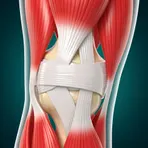
Tissue that supports and joins parts of the body like tendons and ligaments


Surface Forms
Morphology
Etymology
Connective comes from the simple verb connect, which itself comes from old parts con- meaning 'together' and nect meaning 'to bind'. So a connective thing is one that joins or links parts together, which is why we call phrases, tissues, or passages 'connective' when they help hold ideas or parts together.