
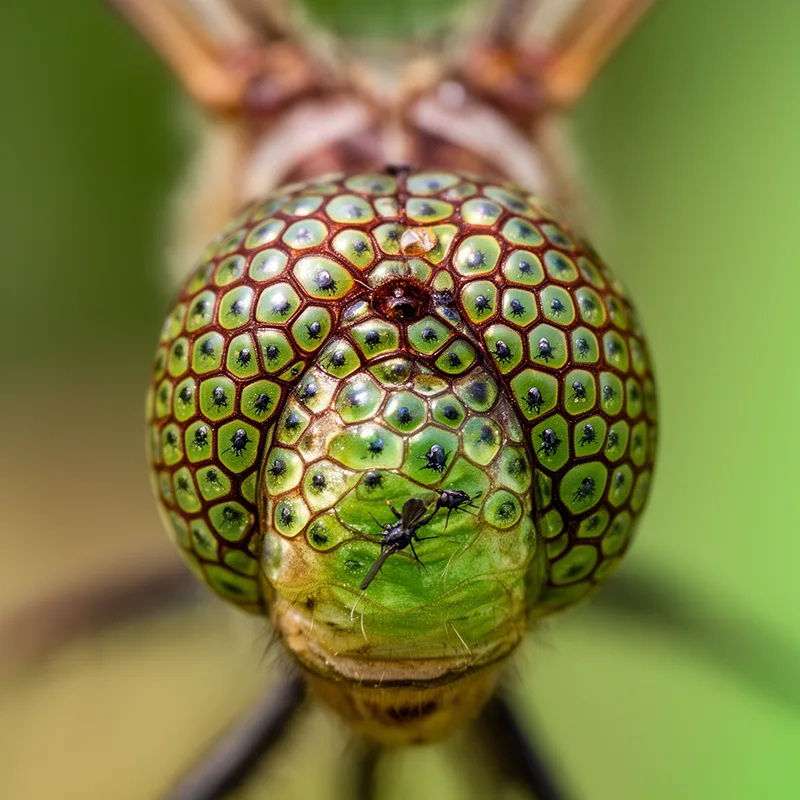
compound eye
- noun
- /ˈkɒmpaʊnd aɪ/
- Specialized
- The software treats each pixel of the image as though it were a facet in a compound eye, and then looks for the signature of movement: a change in brightness registered at one pixel or facet, followed by a similar change in brightness at its neighbor, at its neighbor's neighbor, and so on.
- compound eye of insects
Examples
-
Intriguingly, the motion-detecting software is biologically inspired; it's based on the way insects and other creatures with compound eyes are thought to sense motion.
Academic text (2004) -
The two protruding, vertical budlike organs above the claw are eyestalks; at the end of each eyestalk is a hemispherical compound eye.
Academic text (2004) -
Insects, equipped with complex compound eyes, can maintain a constant heading in their travels, some of them for thousands of miles.
Blog text (5) -
Slowly, carefully, trying not to make a sound, the shaking man turned around to face the giant compound eyes of a gargantuan moth.
Fiction book (2000) -
"My guess is that Joe's eyes were rather like compound eyes, solid blocks of cells, each adjusted to pick up a small dot of the available light.
Fiction book (2000) -
Fiddler crabs, like their arthropod cousins, the insects, have compound eyes.
Academic text (2004) -
Because the crab's compound eyes cap each eyestalk like a thimble on the end of a finger, most of the ommatidia are actually on the shaft of the eyestalk and are aimed more or less horizontally.
Academic text (2004) -
Flies have large compound eyes that allow them to see nearly in every direction.
-
The compound eyes of crabs are structured to give them a wide field of vision, helping them spot predators.
-
Each compound eye of an insect is made up of many tiny units that work together to form a single image.
Synonyms

 ∞
1.0
∞
1.0

A part of the head that detects light and lets you see
How Complex
- Specialized

- Specialized
- Specialized
2
6.5
Surface Forms
Morphology
The sense of an 'eye' that is 'compound' (i.e. made of several parts or elements) is directly and predictably derived from combining 'compound' (composed of several parts) with 'eye' (a vision organ). This is a transparent noun–noun compound following normal English composition patterns, so a B1 learner who knows both words can infer it refers to an eye-like system made of multiple lenses/units.
Etymology
Compound eye is the insect eye made of many tiny lenses. The word compound means 'made of many parts' and eye means 'eye', so because the many lenses work together to give a wide view and help insects see movement quickly, we call it a 'compound eye'.