
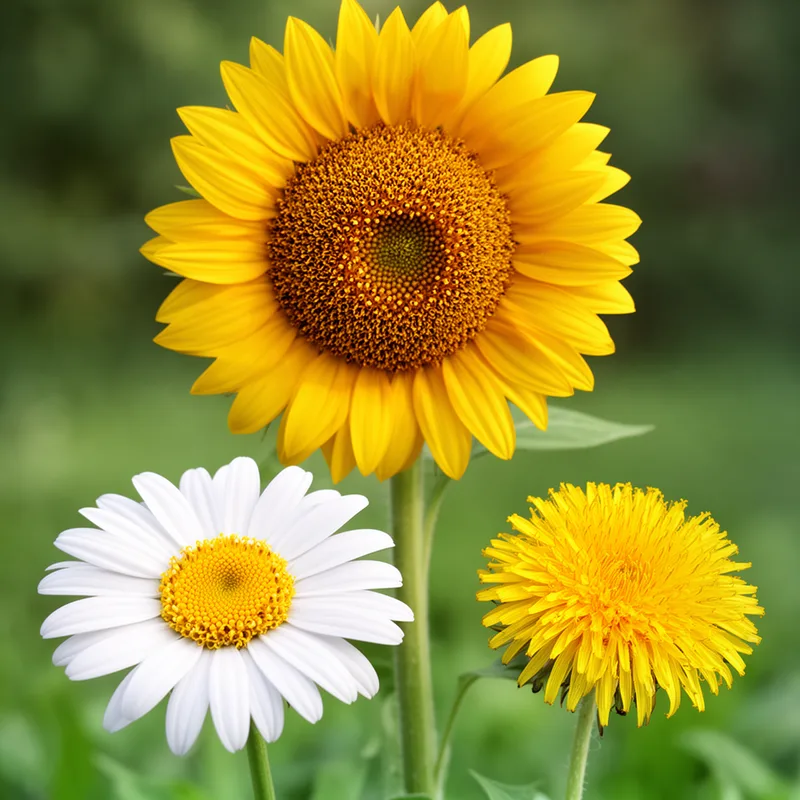
composite plant
- noun
- /kəmˈpɒzɪt plænt/
- Specialized
- Sunflower and dandelion are both types of composite plants found in many temperate regions.
Examples
-
The daisy is a well-known example of a composite plant with its characteristic flower structure.
-
The composite plant has vibrant flowers in spring.
-
Many composite plants are valued in gardens for their long-lasting blooms and variety of colors.
-
Many composite plants attract pollinators.
-
The garden was full of vibrant composite plants, such as sunflowers and daisies, that attracted many bees.
-
In the wildflower field, I spotted several composite plants, including beautiful purple coneflowers and yellow dandelions.
-
Composite plants, like asters and daisies, are often admired for their stunning clusters of tiny blossoms.
Synonyms


 1
9.1
1
9.1
A plant in the daisy and sunflower family with many small flowers together
A large group of plants with flower heads made of many small flowers, like daisies and sunflowers
A large family of flowering plants like daisies, sunflowers, and dandelions
Surface Forms
Morphology
The adjective 'composite' in general English conveys 'made of parts', so a B1 learner who knows both words could infer a plant that is composed of many parts or small flowers, giving a partial clue. However, the term is a technical botanical label for members of the Asteraceae (Compositae) family, a specific taxonomic sense not predictable from everyday meanings, so the expression is only partially transparent.
Etymology
Composite plant The name composite plant comes from the way many small flowers join to make one head that looks like a single 'flower', and composite means 'made of parts' while the plant's 'flower' is actually many tiny flowers together. That's why the term is used for daisies, sunflowers and dandelions.