

composite


 1
6.9
1
6.9
- adjective
- /kəmˈpɒzɪt/
- Specialized
- Stage 4 independent variables measured women's breast cancer awareness: composite measures of a woman's breast cancer knowledge, her perceptions of her susceptibility to breast cancer, and her exposure to and worry about the disease.
Examples
-
About eight inches high, the head was part of a composite statue that had stood in the temple of Inanna in Uruk.
Academic text (2005) -
One year later, Monni Adams submitted a master's thesis to Fraser titled "The Distribution and Significance of Composite Animal-Headed Masks in African Sculpture," which emphasized horizontal masks.
Academic text (1991) -
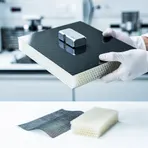
Made of composite materials, these horizontal sand filters and nonmetal tanks offer high strength and corrosion resistance.
Academic text (1998) -
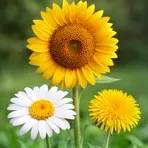
Flowers in the composite family, such as sunflowers and daisies, are known for their vibrant colors and unique structures.
-
The garden featured a variety of composite plants, including begonias and zinnias, which attracted many pollinators.
-
Many herbal remedies use combinations of different composite plants to enhance their effectiveness.
Compounds
- Specialized
2
4.4
A strong, light substance made by joining two different materials
- Specialized
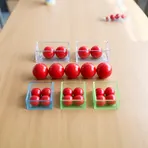
A whole number greater than one that can be divided evenly by a number other than one and itself
- Specialized
A plant like a daisy or sunflower that has many small flowers grouped to look like one

A secondary school that accepts children of all abilities without exam selection

- Specialized
An ancient Roman column style combining Ionic scrolls and Corinthian leaves
Surface Forms
Morphology
Etymology
Composite as a botanical adjective comes from a Latin word made of com- 'together' and ponere 'to put'. It was used because many tiny flowers are 'put together' to form one head, so composite flowers are many small flowers joined into one.