
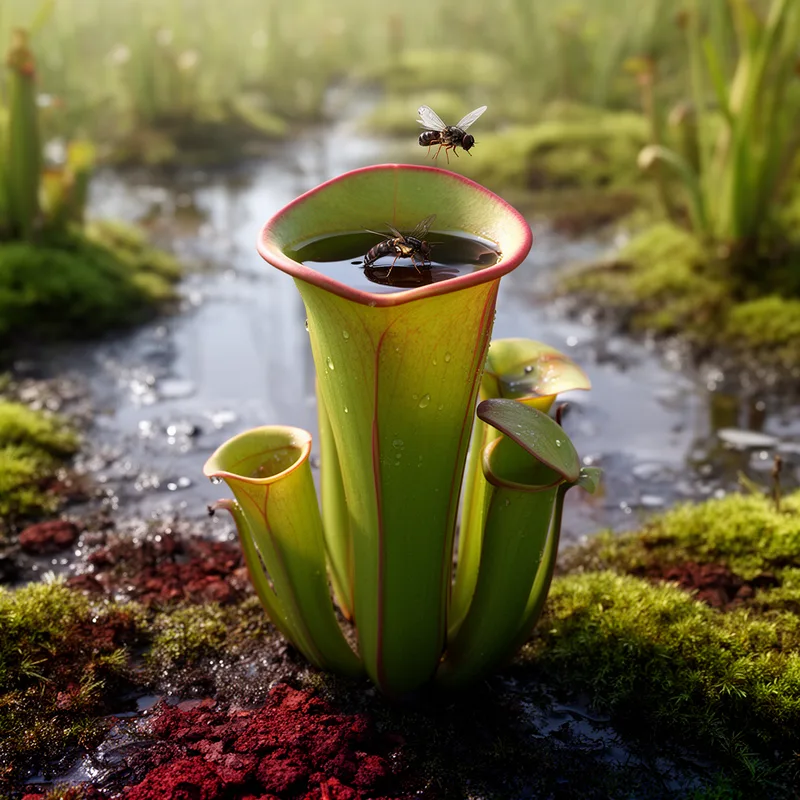
common pitcher plant
- noun
- /ˈkɑːmən ˈpɪtʃər plænt/
- Specialized
- Botanists studied the common pitcher plant to learn how it traps insects for nutrition.
Examples
-
The common pitcher plant has become naturalized in northern Europe, especially parts of Ireland.
-
The common pitcher plant thrives in wet, acidic bogs where few other plants can survive.
-
The common pitcher plant thrives in wet, acidic soils.
-
In my garden, I have a common pitcher plant.
-
Botanists studied the common pitcher plant to learn how it traps insects for nutrition.
-
The common pitcher plant has become naturalized in northern Europe, especially parts of Ireland.
-
The common pitcher plant thrives in wet, acidic bogs where few other plants can survive.
Synonyms
A bog plant with dark red, cup-shaped leaves that trap insects

A plant that eats insects with tube-shaped purple leaves that trap them

A plant that lives many years in bogs with red flowers and cup-shaped leaves that catch insects
Surface Forms
Morphology
The phrase is compositionally built: 'pitcher plant' denotes a plant possessing pitcher-shaped (tubular) leaves, and 'common' simply marks it as the typical or frequent species. Given the provided constituent meanings, the overall sense is directly derivable by a B1 learner and follows standard noun + noun and adjective + noun composition patterns, so it is readily understandable.
Etymology
Common pitcher plant gets its name from its hollow, tube-shaped leaves that look like a pitcher or cup. These 'pitchers' fill with liquid and trap insects so the plant can get extra food, and the word 'common' simply means it is found in many places.

