

common horsetail
- noun
- /ˈkɑːmən ˈhɔːrsteɪl/
- Specialized
- Gardeners sometimes struggle to remove common horsetail from their flower beds.
Examples
-
The common horsetail is often found near streams and wet meadows.
-
Ancient cultures used common horsetail for its medicinal properties.
-
The common horsetail thrives in wet areas.
-
Many gardeners appreciate the common horsetail for its unique appearance.
-
Gardeners sometimes struggle to remove common horsetail from their flower beds.
-
The common horsetail is often found near streams and wet meadows.
-
Many gardeners appreciate the common horsetail for its unique appearance.
Synonyms

 1
8.1
1
8.1

A plant with hollow, jointed stems that spreads like a weed
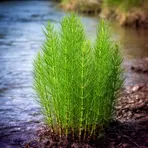
A horsetail plant with feathery, brush-like stems that often grows near water

A common plant with thin hollow stems and bushy branches that grows in damp fields
Surface Forms
Morphology
The meaning 'a widespread species of horsetail' is directly and transparently derived from combining 'common' (widespread) with 'horsetail' (a plant); the compound simply specifies a frequently occurring horsetail. This is a regular nominal modification pattern found across languages and follows expected compositional rules, so a B1 learner who knows both constituents should understand it.
Etymology
Common horsetail: The plant name common horsetail comes from how the plant looks. Its thin, jointed stems and brushy top made people call it horsetail because it 'looks like a horse's tail', and common means 'found in many places', so the name tells you both its shape and that it grows widely.