

to come forth
 7
4.2
7
4.2

- phrasal verb
- /kʌm fɔrθ/
- Formal
- He decided it was time to come forth and share his story with the world.
- came forth as a witness
Loading YouTube…
Watch on YouTubeSo monotheism came forth through Judaism primarily.
- So monotheism came forth through Judaism primarily.
- And then one morning the glad cry came forth.
- But yeah, I'm so proud of him for standing up and coming forth and letting the world know that he does have Ms.
- And so I always preach, have love, have passion for what you do and make sure that comes forth in your effort.
- One comes forth as a fire, another comes forth as a cataract of water, and other turns into hills.
- He talks about compassion sometimes coming forth in what he calls individual cases, so in particular circumstances.
- So there's one thing the lowest is the same time the highest, the revealed, which has come forth wholly on the surface is also the most profound.
- But when I'm in the interview room, my solicitor has come forth like some information like yo like like your Cody might be like.
Examples
-
After centuries of hiding, he has come forth to claim the world of men for his own.
Fiction book (1991) -
Let the Lord of the Black Land come forth!
-
Thank God for the people who are helping the truth come forth!
Blog text (10) -
The goal is that new knowledge comes forth best when we get people together, and together they rally around new ideas.
-
I'm encouraged by the number of powerful voices and people with access who are coming forth and speaking out.
Blog text (3) -
I've spoken to a number of addicts who will come forth and testify at this trial.
-
A dissident steps out of the shadows, then respectable critics, then others come forth.
Academic text (2001) -
When the Resurrection and the Life says, "Lazarus, come forth," the rest of the story does not depend on Lazarus.
Blog text (5) -
When called upon, the witness chose to come forth and provide her testimony.
-
After much deliberation, they finally came forth with their findings on the matter.
Synonyms
 ∞
1.0
∞
1.0
Move out of or appear from a place
 ∞
1.4
∞
1.4
To be seen or arrive at a place
 902
2.4
902
2.4
To arrive and be received, for example news or donations
 873
1.0
873
1.0
To come into view or become visible
 526
2.3
526
2.3
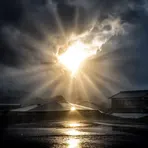
To appear or become visible, for example when the sun shines through clouds
 333
3.3
333
3.3
Start to exist or happen
 249
3.5
249
3.5
To come out from behind or under something and become visible
 183
3.0
183
3.0
To appear or arrive when you do not expect it
 177
2.0
177
2.0
To appear after being lost or when not expected
 145
2.5
145
2.5
To appear or happen suddenly
 82
2.1
82
2.1
Begin to appear or become visible
 52
3.9
52
3.9
To become known after being hidden
 43
3.3
43
3.3
To appear quickly in a place, often as new shops or cafes
 30
6.7
30
6.7
To come out from a place, like smoke or sound
 20
2.9
20
2.9
To appear suddenly without warning
 20
4.3
20
4.3
To appear suddenly, often as a problem or question
 20
3.9
20
3.9
To start to exist
 9
6.1
9
6.1
Become more noticed or important in a situation
 5
5.4
5
5.4
Suddenly start to happen with a lot of energy
 2
3.4
2
3.4
Start suddenly and appear or happen quickly
 1
8.9
1
8.9
To leave a place by going out

To begin suddenly in the mind as an idea or feeling
Antonyms


How Visible

Surface Forms
Morphology
The meaning 'to appear or emerge' is directly and compositionally derived from 'come' (move or originate) + 'forth' (out/forward into notice); the verb + directional adverb pattern is a standard, predictable English composition. Although 'forth' is somewhat formal/archaic, a B1 learner who knows both constituents can infer the MWE meaning (similar to come out/come forward), so it is transparent.
Etymology
Come forth paints the picture of someone or something stepping out into view, with come meaning 'move' and forth meaning 'forward or out'. So it means 'to appear or emerge from a place or source'.