
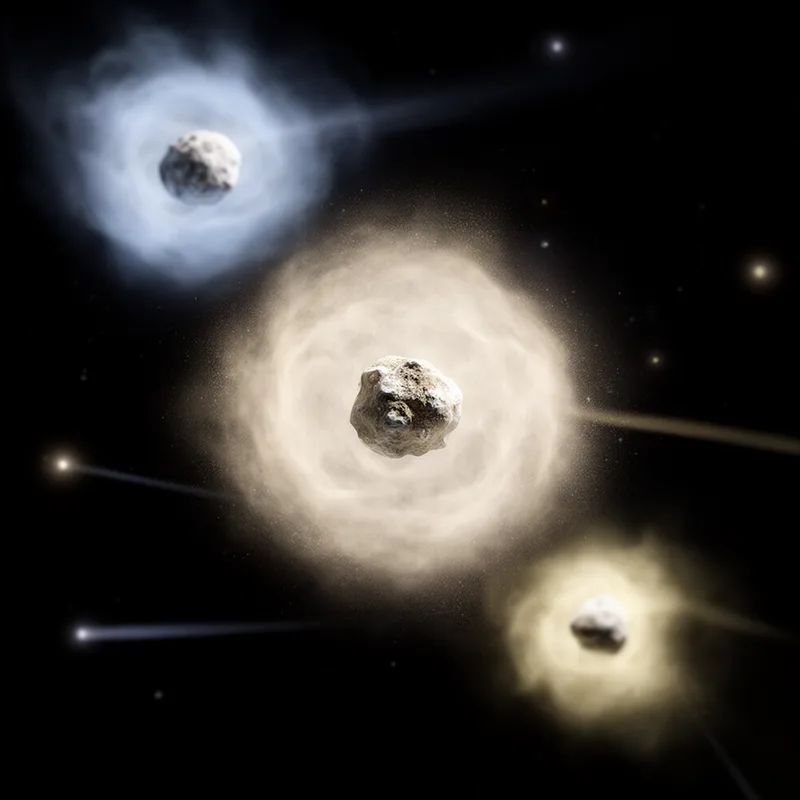
comae
- noun
- /ˈkoʊmiː/
- Specialized
- As the comet approached the sun, its comae expanded dramatically, creating a spectacular display.
Examples
-
Different comae can vary in size and composition depending on the comet.
-
Scientists study the comae of various comets to understand their composition.
-
Astronomers observed several comae in the images of distant comets.
-
The brightness of the comae made it difficult to see the comet nuclei clearly.
-
The comet's comae shimmered brightly as it approached the sun.
-
The comet's comae are visible through a telescope, surrounding the bright nucleus.
-
During the night, astronomers observed the intricate details of the comae of various comets.
Surface Forms
Morphology
Etymology
The word comae is the plural of coma and comes from the Latin word coma, which means 'hair'. Early sky watchers used it for the fuzzy cloud around a comet because it looked like hair, so comae are the comet's fuzzy 'hair'.

