
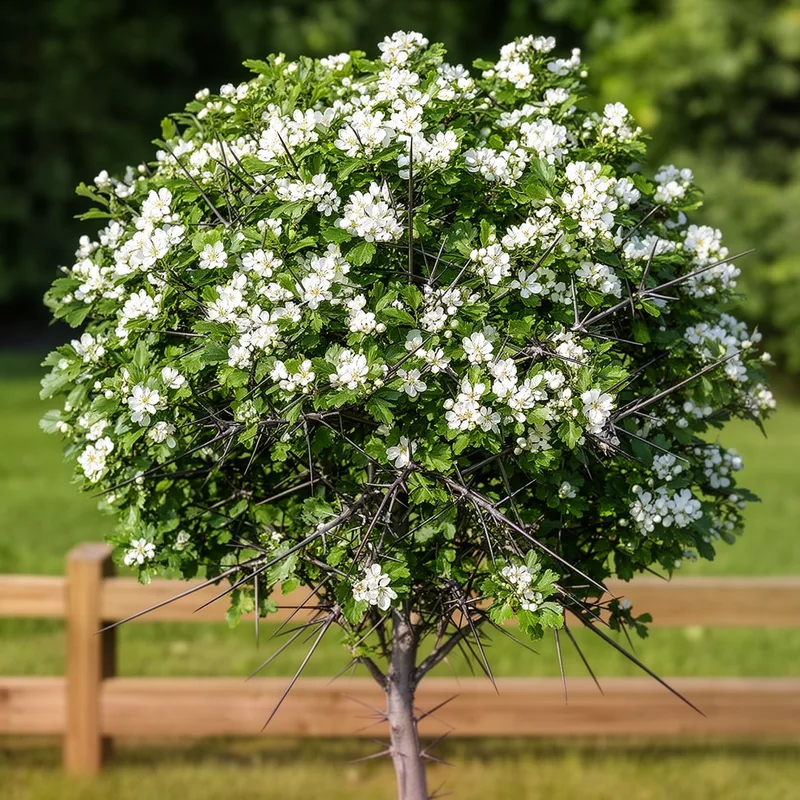
cockspur hawthorn
- noun
- Specialized
- The cockspur hawthorn is valued for its spring blossoms and dense foliage in landscaping.
Examples
-
The cockspur hawthorn is known for its beautiful white flowers.
-
Gardeners often choose the cockspur hawthorn as a barrier plant due to its thorny nature.
-
You can easily recognize a cockspur hawthorn by the formidable thorns along its branches.
-
Many gardeners choose the cockspur hawthorn for its ornamental value.
-
The cockspur hawthorn is known for its striking white flowers in the spring.
-
In the garden, the cockspur hawthorn adds beautiful fall colors with its vibrant leaves.
-
Landscapers often recommend the cockspur hawthorn for its impressive thorns and resistance to pests.
Synonyms

A small tree with long sharp thorns and red fruit often planted in gardens

A small tree or bush from eastern North America with long sharp thorns, white flowers, and red berries
Surface Forms
Morphology
The compound is fully compositional: 'cockspur' describes the spur-like long thorns and 'hawthorn' names the shrub, so the overall meaning (a hawthorn species with long, straight thorns) can be directly inferred from its parts. This noun+noun compounding is a common and transparent pattern, so a B1 learner who knows both constituents would understand the MWE.
Etymology
The name cockspur hawthorn may come from the long, straight thorns that look like a rooster's 'spurs'. The words cockspur and hawthorn together give a clear image of a very thorny hawthorn, so the name helps you remember that this tree has strong thorns and is often used as a 'barrier' plant.

