

cochineal


 1
9.9
1
9.9
- noun
- /ˌkoʊtʃɪˈniːl/
- US
- All he brought home was a lone pot of Indian fig covered with cochineal insects, which Linnaeus's gardener had mistakenly washed away.
- cochineal insect
Examples
-
He then traveled to Campechy and Vera Cruz to look for jalap, sarsaparilla, contrayerva, cochineal, gum elemi, and any other useful plants to add to his collection.
Academic text (2009) -
Cochineal is a natural red dye that comes from the cochineal insect, which feeds on cactus plants.
-
Are you confusing it with cochineal?
Blog text (9) -
There's a cargo of cochineal newly arrived and at the queen's disposal.
-
The book traces the path of cochineal, a red dye derived from the cochineal insect and shipped to Europe by the Spanish conquistadors.
Academic text (2011) -
The artist used cochineal to produce a vibrant red hue in her painting.
-
Historically, cochineal was traded as a valuable dye in Europe, prized for its rich color.
Synonyms
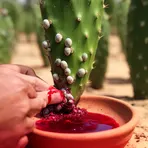
A small Mexican insect that lives on cactus plants and makes a red dye
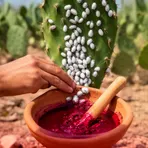
A small Mexican insect that lives on cactus plants and makes red dye

A group of small insects whose females make the red cochineal dye
Compounds
Surface Forms
Etymology
Cochineal comes from the Spanish word cochinilla, which means 'little pig' because the small, round insects looked a bit like tiny pigs on cactus plants. So cochineal names the Mexican insect that people harvested for its strong red color.