
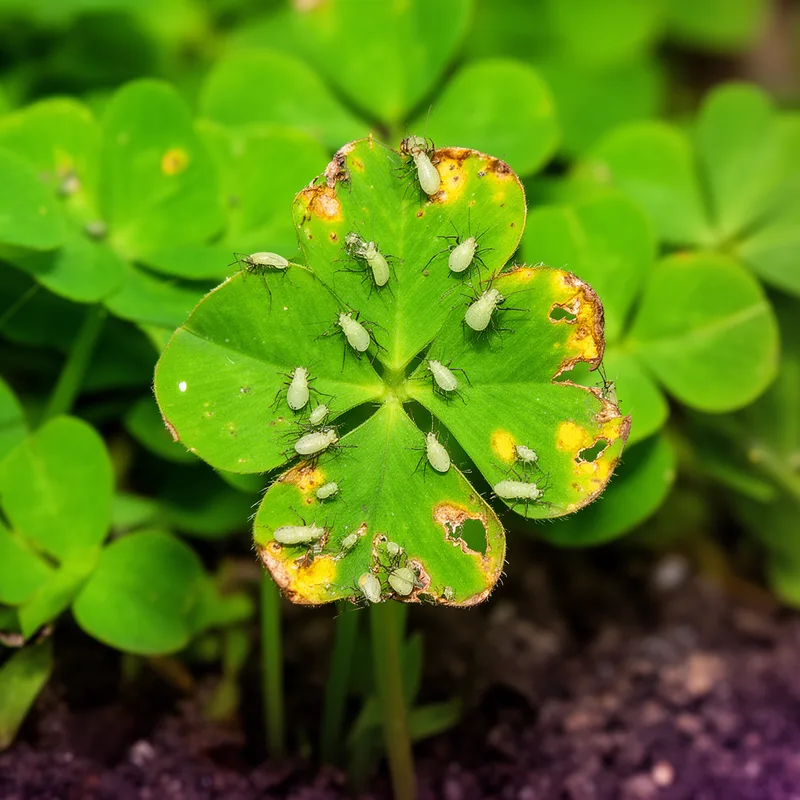
clover louse
- noun
- /ˈkloʊvər laʊs/
- The gardener discovered a group of clover lice damaging the young shoots.
Examples
-
A severe infestation of clover louse can quickly destroy an entire patch of clover.
-
Farmers monitor their fields regularly for signs of clover louse activity.
-
The clover louse is damaging my garden.
-
Many farmers are worried about clover lice this season.
-
A serious infestation of clover louse can ruin a clover garden in just a few days.
-
The farmer noticed that the clover louse was causing significant damage to his crops.
-
To protect his clover plants, he applied an insecticide against the clover louse.
Synonyms

A small insect like an aphid that sucks juices from plants

A small insect that sucks sap from plants
Surface Forms
Morphology
The meaning 'an insect pest that infests clover' is directly and compositionally derived from combining 'clover' (the plant) with 'louse' (a small parasitic insect), so the referent is predictable as a louse associated with clover. This straightforward noun+noun compound follows common cross-linguistic compounding patterns and would be understandable to a B1 learner who knows both constituents.
Etymology
The noun clover louse paints a simple picture: a tiny louse living on a clover plant and sucking its juices. That's why the name means 'an insect pest that eats and damages clover'.

