
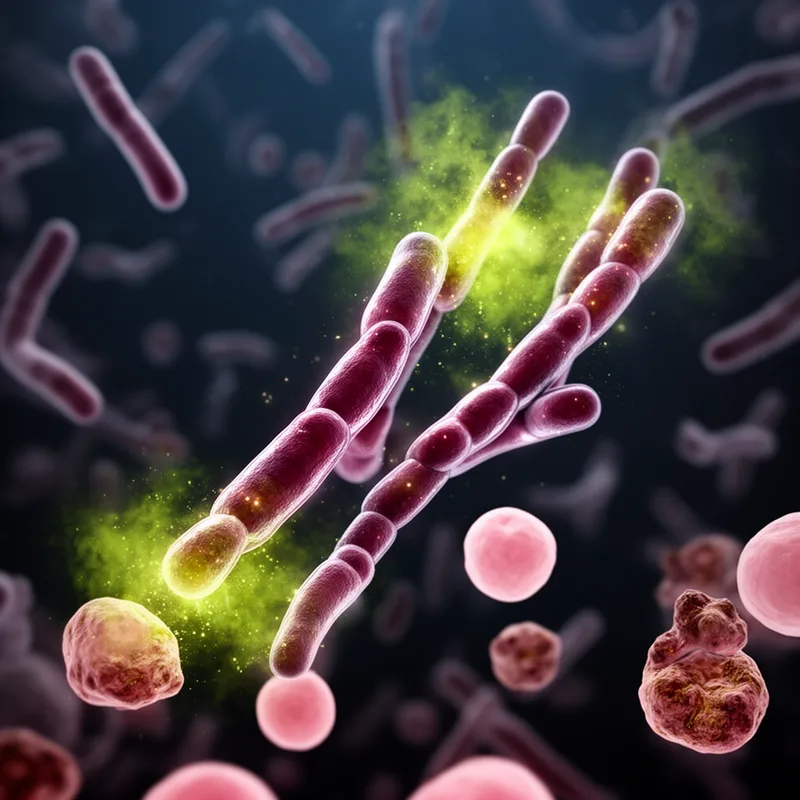
clostridia
- noun
- /kləˈstrɪdiə/
- Specialized
- Some species of clostridia produce toxins harmful to humans.
- clostridia bacteria
Examples
-
The clostridia bacteria can cause severe infections.
-
A recent study showed that elevated levels of clostridia in the gut can lead to various health issues in humans.
-
Researchers studied the behavior of clostridia in anaerobic environments.
-
Some clostridia produce dangerous toxins that can cause food poisoning in humans.
-
The soil sample was found to contain several types of clostridia, indicating possible contamination.
-
Some standard treatments are ineffective against clostridia, which can cause serious complications in surgical patients.
-
The laboratory confirmed the presence of clostridia in the contaminated food sample associated with the outbreak.
Synonyms

 1
9.9
1
9.9

A kind of bacteria that often lives without oxygen and can cause disease in people and animals
Surface Forms
Morphology
clostridia = clostridium (opaque) = clostrid + ia
The word 'clostridia' is the plural of the scientific genus name 'Clostridium', which is not a common English word and does not transparently convey its meaning to learners.
Etymology
Clostridia comes from the Greek word klōstēr, which means 'spindle', because these bacteria look like long rods that are often swollen in the middle by a spore. Think of a spindle to remember their rod-shaped form and why this name is used for a group of bacteria that can cause disease.