

to classify
 110
3.4
110
3.4

- verb
- /ˈklæsɪˌfaɪ/
- Teachers often classify students into different groups to provide targeted support in learning.
- classify students
- classify according to
- classify participants
Loading YouTube…
Watch on YouTubeWhen my son Giles was young, autism was classed as a rare disorder.
- When my son Giles was young, autism was classed as a rare disorder.
- We want to classify the energy levels of systems.
- Well, I don't know that I would classify them as smart.
- The Sequoia has what I think most people would classify as an OK system.
- So it it can be classified as non verbal.
- But Marx adds another concept, another way to classify people into classes.
- I mean, a lot of people would would have classified me as some type of football player.
- So here is Harry proposing to classify himself in his own fashion.
- So are you saying Kissinger, how would you classify his political core?
- It's, it's the, there's really very few people I would, I would classify as a star.
- There are homes on the land of Israel that you wouldn't classify as stolen.
Examples
-
The participants were 336 college students who had been classified as having learning disabilities.
Academic text (2013) -
But Marx adds another concept, another way to classify people into classes.
-
We want to classify the energy levels of systems.
-
-You want to classify prime numbers?
-
Unfortunately, there is not enough data to classify the individual students in this manner.
Academic text (2011) -
Ideally, one would like to be able to classify students in some manner.
Academic text (2011) -
Twenty percent of all high school students were classified as English language learners.
Academic text (2013) -
So in this case, they're asking us to classify what type of triangle we have.
-
Can we get extra extra credit if we classify the fossil by genus and species?
-
Based on these criteria, 64% of schools were classified as sustaining schools.
Academic text (2013)
Synonyms
 451
1.0
451
1.0
To put things into groups by type or order
 225
2.3
225
2.3
To tell how two things are different
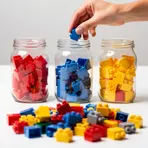 59
3.5
59
3.5
To put things or people into groups by what they have in common
 38
1.2
38
1.2
To put people and things together by type or purpose
 37
2.8
37
2.8
To put things into groups and into the right order
 23
3.9
23
3.9
To list things and write details about them
 22
6.8
22
6.8
To separate things or parts for a special purpose
 19
2.9
19
2.9
To put people or things into groups by shared features
 17
4.2
17
4.2
Put things into groups that are alike
 4
7.3
4
7.3
Put something into a certain group or class
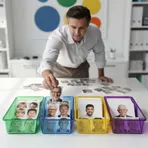 2
5.0
2
5.0
To put people or things into the same group because they share a feature
How Specific

Surface Forms
Morphology
Etymology
Classify comes from class ('group') and the ending -ify ('make'), so it literally means 'make into a group'. That's why to classify something is to sort or arrange things into groups, like animals, books, or types of information.