

city-state
 8
5.1
8
5.1

- noun
- /ˈsɪti steɪt/
- The ancient city-states of Greece had their own governments and often competed against each other.
- Italian city-state
- Greek city-states
- powerful city-states
Loading YouTube…
Watch on YouTubeYou know, the the Greek city states were not theocracies.
- You know, the the Greek city states were not theocracies.
- It was a group of independent city states like Greece.
- We organized ourselves around city states, empires, and sovereign states.
- And, you know, the third inspiration is Singapore with Lee Kuan Yew, who built a city state from nothing.
- We're shifting the locus of power in this century from nation states to city states.
- So and so that's why it's cities and city states where this stuff has has happened best.
Examples
-
Facing an onslaught, the Greek city-states banded together to fight the invaders.
Fiction book (2002) -
You know, the the Greek city states were not theocracies.
-
Singapore is a little city-state next to bigger countries with greater natural resources.
Academic text (1992) -
The Sumerian Empire consisted of distinct city states that operated like small nations.
-
But one year later, the combined forces of the Greek city-states beat the Persians in battle.
Fiction book (2002) -
Athens and Sparta were powerful city-states in ancient Greece, ones that fought each other for nearly 30 years.
Fiction book (2002) -
After the Persian War, Athens recruited other Greek city-states to form the Delian League.
Fiction book (2002) -
From 431 to 404 B.C., Greece's two mightiest city-states battled each other for control of land and sea.
Fiction book (2002) -
Singapore is a successful city-state known for its global financial hub and diverse culture.
-
Monaco is a small city-state located on the French Riviera, famous for its wealthy residents.
Synonyms
 1
4.7
1
4.7
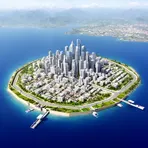
A country that is only one city and its nearby land
How Complex


Surface Forms
Morphology
Etymology
City-state joins city ('town') and state ('country' or 'government'), so the name literally means a city that is also a state. That's why places like ancient Athens or modern Singapore are called city-states: they are single cities with their own government.