
cholate


 1
9.5
- noun
- /ˈkoʊleɪt/
- Specialized
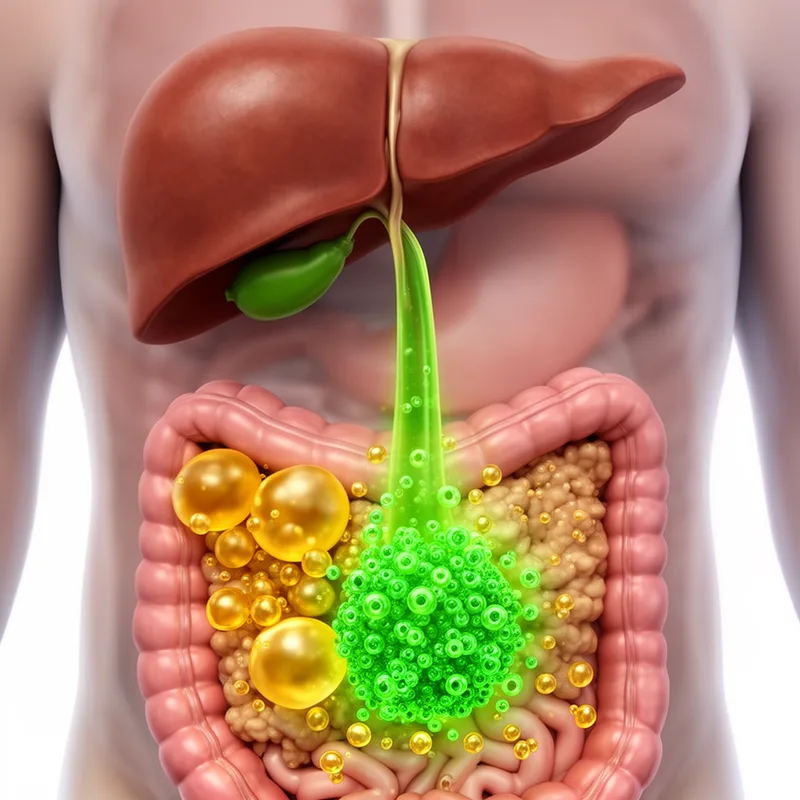
- The body uses cholate to help digest fats and absorb vitamins from food.
Examples
-
There is a massive swelling zone in a wide range of composition (typically 20 mol% < acid < 50 mol%). The swelling rate can be reduced by the addition of a dissolution-modifying agent such as t-butyl cholate.
Academic text (2001) -
A classical example is t-butyl cholate (TBC) 26, which is converted to cholic acid (ChA) upon reaction with a photochemically generated acid.
Academic text (2001) -
The lipophilic cholates could suppress base penetration, protect anhydride, and reduce undesirable thinning in the unexposed area.
Academic text (2001) -
One of the 193-nm resist systems is based on the NB-MA terpolymer involving acrylic acid as a third monomer in conjunction with the use of cholate derivatives.
Academic text (2001) -
During a medical exam, doctors may check cholate levels to assess liver function.
-
Research on cholate contributes to our understanding of bile salts in digestion.
Synonyms
 1
4.8
A substance in bile that helps break down fats so the body can digest them
Surface Forms
Morphology
cholate = cholic (opaque) = chol + ate
The word is a technical chemical term built on a rare bile-related base, so most learners will not infer its meaning from the parts alone.
Etymology
Cholate comes from the Greek root chole meaning 'bile' and the ending -ate meaning 'salt'. You can see the same chole in cholesterol, and cholate is a salt made from bile acids, so it helps your body digest fats.