

chlorophyll
 11
5.8
11
5.8

- noun
- /ˈklɔːrəˌfɪl/
- Specialized
- When the chlorophyll absorbs energy, it goes up to an excited state.
- chlorophyll fluorescence
- chlorophyll concentration
- chlorophyll molecules
Loading YouTube…
Watch on YouTubeAnd then the bottom part of your leaf has all these little spongy chlorophyll molecules running around.
- And then the bottom part of your leaf has all these little spongy chlorophyll molecules running around.
- Magnesium is found at the center of a chlorophyll molecule.
- Almost every sprout will, will, will leaf and you'll get green and you'll get chlorophyll.
- You see, chlorophylls are the main biological green pigments in the world, but most animals can't produce them.
- And finally, as the leaf dies and the chlorophyll stops working and the carotenoids stop working, we're left with anthrocyanins.
- It looks like skin care, chlorophyll lifting mask.
- So eating more greens is great because greens contain chlorophyll and it's like internal deodorant.
- I believe a good thing to look into is chlorophyll.
- It's in ATP, it's in chlorophyll that's uses that relies on nitrogen.
- But the truth is, yeah, a lot of people could use more chlorophyll in their diet, could use more greens, could use some more alkaline rich foods.
Examples
-
Leaves of most deciduous plants are green because they contain chlorophyll, a pigment involved in plant nutrition.
-
Magnesium is found at the center of a chlorophyll molecule.
-
When the chlorophyll absorbs energy, it goes up to an excited state.
-
Even leaves that block the green light from our eyes have the chlorophyll necessary for photosynthesis.
Blog text (4) -
Phytoplankton contain chlorophyll, which absorbs light in the blue and red.
Academic text (2011) -
Plants absorb radiation energy principally through chlorophyll but also through carotenoid pigments contained in green plant tissue.
Academic text (2010) -
Plants absorb radiation energy principally through chlorophyll but also through carotenoid pigments contained in green plant tissue.
Synonyms
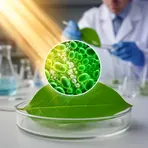
Green pigment in plants that turns sunlight into food
Compounds
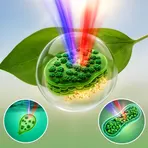
- Specialized

 1
6.3
1
6.3
A green pigment in plants, algae, and some bacteria that absorbs light to help make food

- Specialized
A green substance in plant leaves that helps them make food from sunlight

- Specialized
A green pigment in brown algae and tiny water organisms that helps make food from light

Surface Forms
Morphology
chlorophyll = chloro + phyll (semi-transparent) = chloro + phyll
Composed of Greek combining forms that together indicate 'green' + 'leaf' for a pigment in plants; the elements are familiar in scientific contexts but are not independent everyday English words for most learners.
Etymology
Chlorophyll comes from Greek parts chloros 'green' and phyllon 'leaf', so it literally means 'green leaf'. That's why chlorophyll is the green substance in leaves that helps plants capture sunlight to make food.