
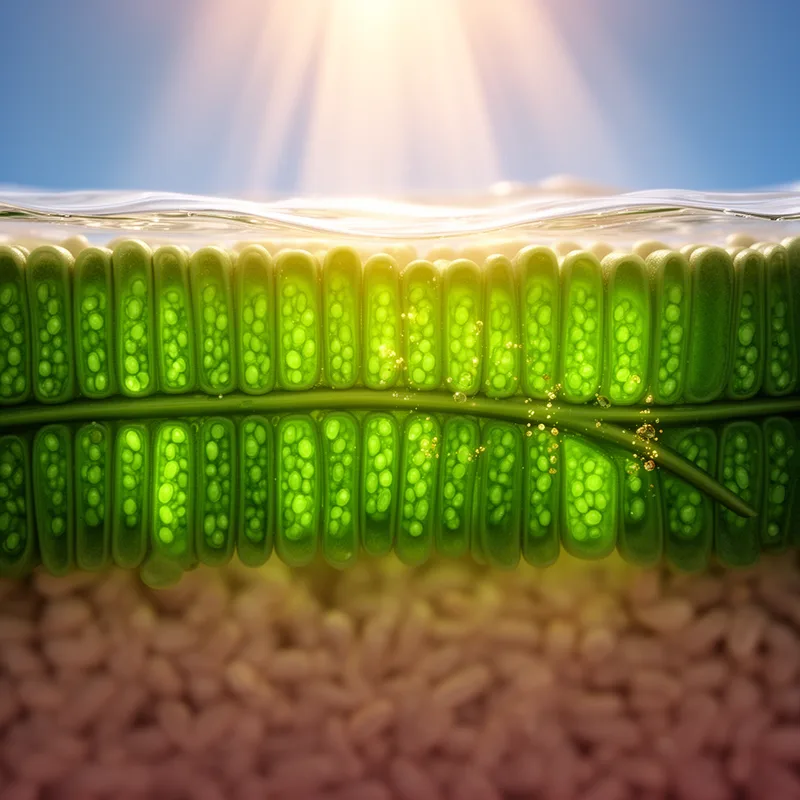
chlorenchyma
- noun
- /klɔːˈrɛnkaɪmə/
- Specialized
- The palisade layer of leaves is composed mainly of chlorenchyma to carry out photosynthesis.
Examples
-
The chlorenchyma in the leaves is crucial for photosynthesis.
-
Plants with well-developed chlorenchyma tend to grow faster.
-
Botanists observed that the chlorenchyma cells were especially abundant near the surface of the leaf.
-
In aquatic plants, chlorenchyma helps to keep the stems buoyant while providing cells for photosynthesis.
-
The palisade layer of leaves is composed mainly of chlorenchyma to carry out photosynthesis.
-
In aquatic plants, chlorenchyma helps to keep the stems buoyant while providing cells for photosynthesis.
-
Plants with well-developed chlorenchyma tend to grow faster.
Synonyms


 1
9.1
The inner leaf tissue that contains cells that make food from sunlight
Surface Forms
Morphology
chlorenchyma = parenchyma (semi-transparent) = chlor + enchyma
Formed with the scientific combining form 'chlor-' meaning 'green' attached to the tissue element related to 'parenchyma'; understandable to those with botanical knowledge but obscure to general learners.
Etymology
Chlorenchyma comes from Greek parts chlor- meaning 'green' and -enchyma meaning 'tissue', like in parenchyma. So, chlorenchyma literally means 'green tissue', which helps you remember it is the green plant cells that make food by photosynthesis.