
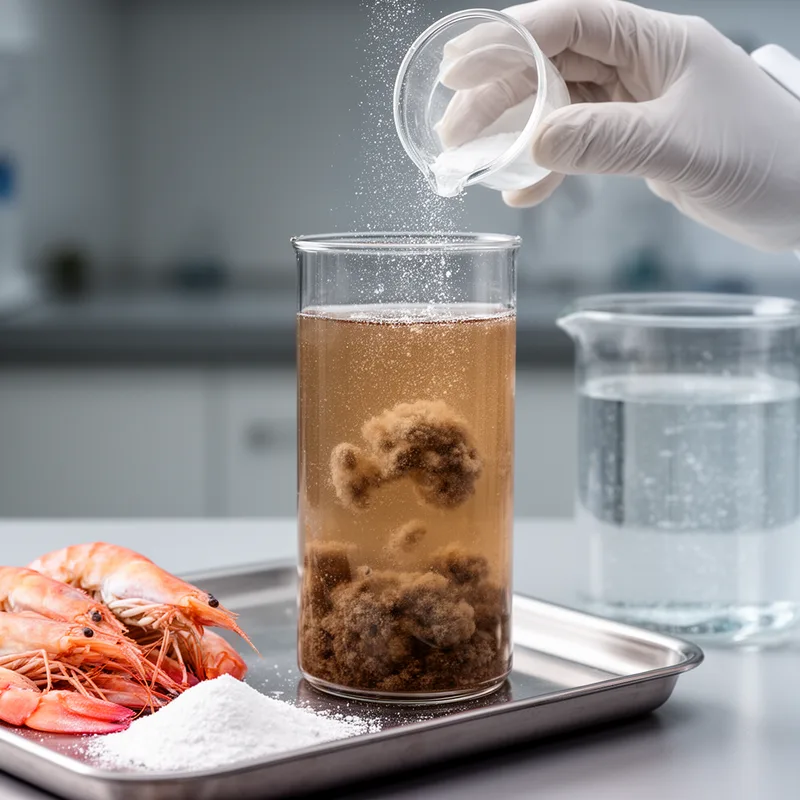
chitosan


 1
8.5
- noun
- /ˈkaɪtəˌsæn/
- Specialized
- Can chitosan effectively remove pollutants from wastewater?
- chitosan's ability to remove
Examples
-
The water treatment plant uses chitosan to clarify the water.
-
The engineers used chitosan to improve the clarity of the treated water.
-
Adding chitosan to the process helped remove more impurities from the wastewater.
-
Researchers are studying chitosan for its effectiveness in different water treatment systems.
-
To improve water clarity, engineers add chitosan to bind and remove suspended particles.
-
Research indicates that chitosan is effective in filtering out impurities in wastewater treatment.
-
In their study, scientists found that chitosan can significantly reduce the levels of contaminants in treated water.
Surface Forms
Morphology
chitosan = chitin (semi-transparent) = chito + san
Formed from the biopolymer 'chitin'; the relation is clear to those who know 'chitin', but 'chito-' and the suffix are specialized chemical naming conventions that may be unfamiliar to general learners.
Etymology
Chitosan comes from chitin, the strong shell material of insects and shellfish, from the Greek chiton meaning 'covering'. So chitosan is a shell-derived substance 'made from shell' that can bind small particles, which is why it is used to help clean and clear water.