
chitosan


 1
8.4
- noun
- /ˈkaɪtəˌsæn/
- Specialized
- Researchers are exploring the use of chitosan in drug delivery systems for its biodegradable properties.
- treatment with chitosan
- chitosan compound
Examples
-
Either way, this concentration is more believable, particularly since the patent that Mr. Fire provided mentions using 55-70% NaOH for making chitosan from chitin.
Blog text (7) -
The pellet containing insoluble chitosan was stored at +4 °C until assay.
Blog text (7) -
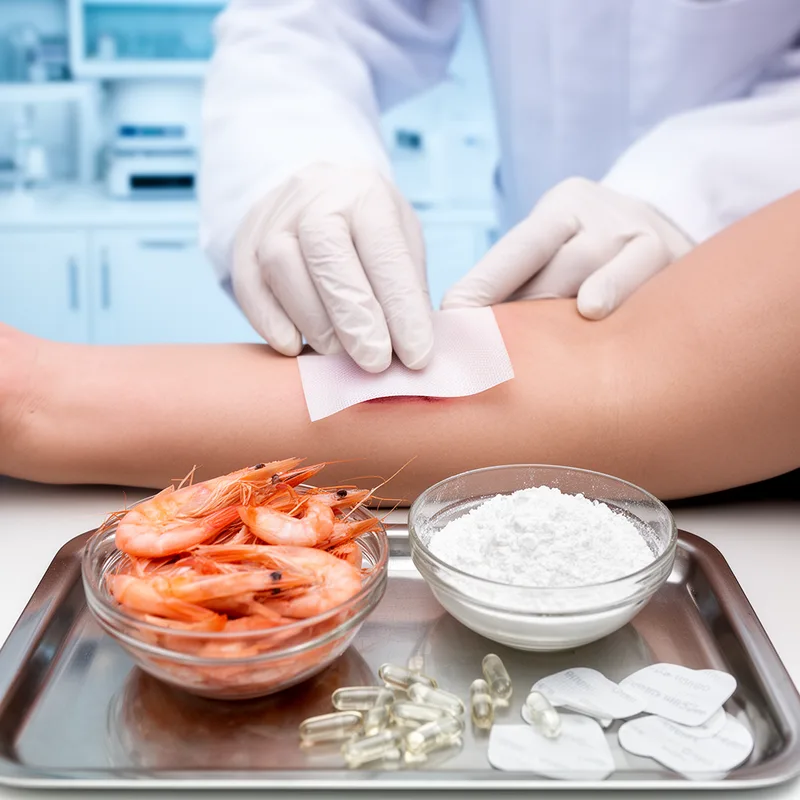
Agents such as chitosan are hemostatic dressings that control bleeding, are cost-effective, and are vital in preventing death on the battlefield.
Academic text (2007) -
I am extracting chitin from fungi as well as infected lung, and the KOH step is to deacetylate the chitin into an insoluble chitosan.
Blog text (7) -
Derivatives of natural cationic polymers are frequently in use in TE research, e.g., N,N,N-trimethyl chitosan chloride (TMC).
Academic text (2018) -
Chitosan is commonly used in wound dressings due to its ability to promote healing.
-
In laboratories, chitosan serves as a safe and effective material for creating biocompatible scaffolds.
Surface Forms
Morphology
chitosan = chitin (semi-transparent) = chito + san
Formed from the biopolymer 'chitin'; the relation is clear to those who know 'chitin', but 'chito-' and the suffix are specialized chemical naming conventions that may be unfamiliar to general learners.
Etymology
Chitosan comes from chitin, the tough material in the shells of insects and shellfish, and from the Greek chiton meaning 'tunic' or 'covering'. So chitosan is a substance 'made from shell', which helps explain why it is natural, biodegradable, and useful in bandages and other medical materials.