
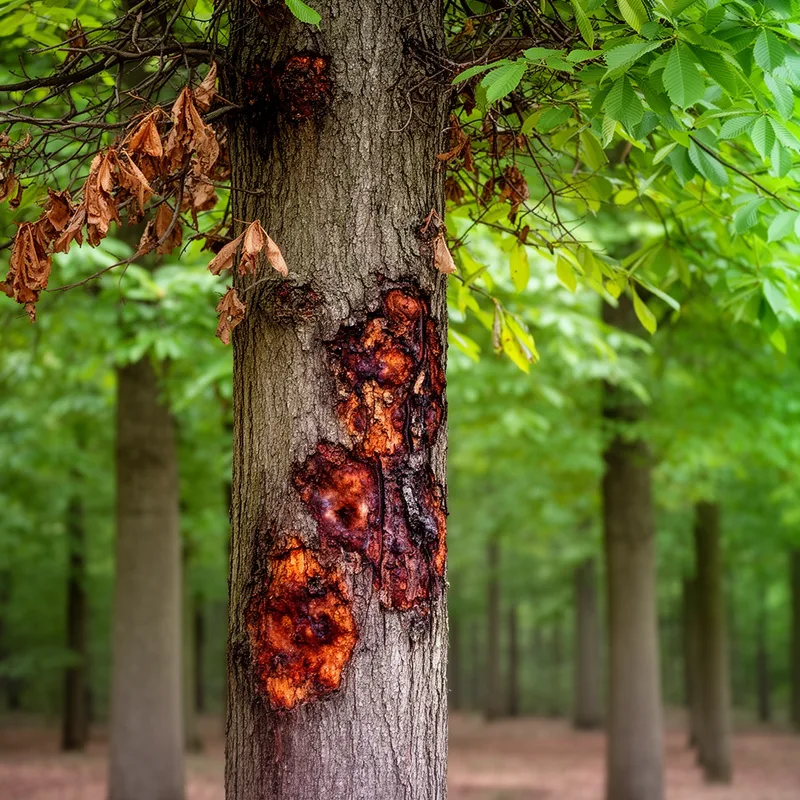
chestnut canker
- noun
- /ˈʧɛstnʌt ˈkæŋkər/
- Specialized
- Many historic chestnut trees were lost to chestnut canker in the last century.
Examples
-
The spread of chestnut canker devastated forests in the eastern United States.
-
Researchers are working to develop resistant varieties to combat chestnut canker.
-
The chestnut canker has devastated many forests.
-
Many chestnut cankers were found in the park last year.
-
Many historic chestnut trees were lost to chestnut canker in the last century.
-
The spread of chestnut canker devastated forests in the eastern United States.
-
Researchers are working to develop resistant varieties to combat chestnut canker.
Synonyms

 1
8.5
1
8.5

A disease that makes dead areas on tree bark and branches

 1
7.6
1
7.6
A fungus that makes open sores on American chestnut trees and often kills them

A disease that kills American chestnut trees by making deep wounds in their bark
Surface Forms
Morphology
The meaning is directly compositional: 'chestnut' names the host plant and 'canker' names a type of fungal bark disease, so together they denote the disease affecting chestnut trees. This noun+noun pattern (disease name applied to a specific host) is a regular, cross-linguistic construction, so a B1 learner who knows both constituents would readily infer the MWE's meaning.
Etymology
The noun chestnut canker joins chestnut (the tree) and canker, an old word for a 'sore' or 'wound' on plants or animals. The image is of a dark, spreading sore on the tree's bark that eats the wood, so the name now means a disease caused by a fungus that can kill chestnut trees.