

cheliferous
- adjective
- /ˌkɛlɪˈfɛrəs/
- Specialized
 :
queliferado
:
queliferado
- Unlike spiders, many crustaceans are cheliferous, using their pincers for defense and feeding.
Examples
-
Certain species of scorpions are cheliferous, possessing large pincers at the end of their legs.
-
The zoologist classified the mysterious arthropod as cheliferous due to its prominent claws.
-
Look at that cheliferous crab!
-
The cheliferous species of scorpions are fascinating.
-
Certain species of scorpions are cheliferous, possessing large pincers used for grasping their prey.
-
The zoologist classified the mysterious arthropod as cheliferous because it has large, pincer-like claws.
-
Many crustaceans are cheliferous, employing their pincers effectively for both defense and feeding.
Synonyms
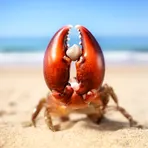
Having a claw with two parts that close together
Surface Forms
Morphology
Etymology
Cheliferous comes from the Greek root chelē meaning 'claw' and the suffix -ferous meaning 'bearing' or 'carrying', as in coniferous 'cone-bearing'. So, cheliferous literally means 'claw-bearing', which is why it describes animals with pincers.

