
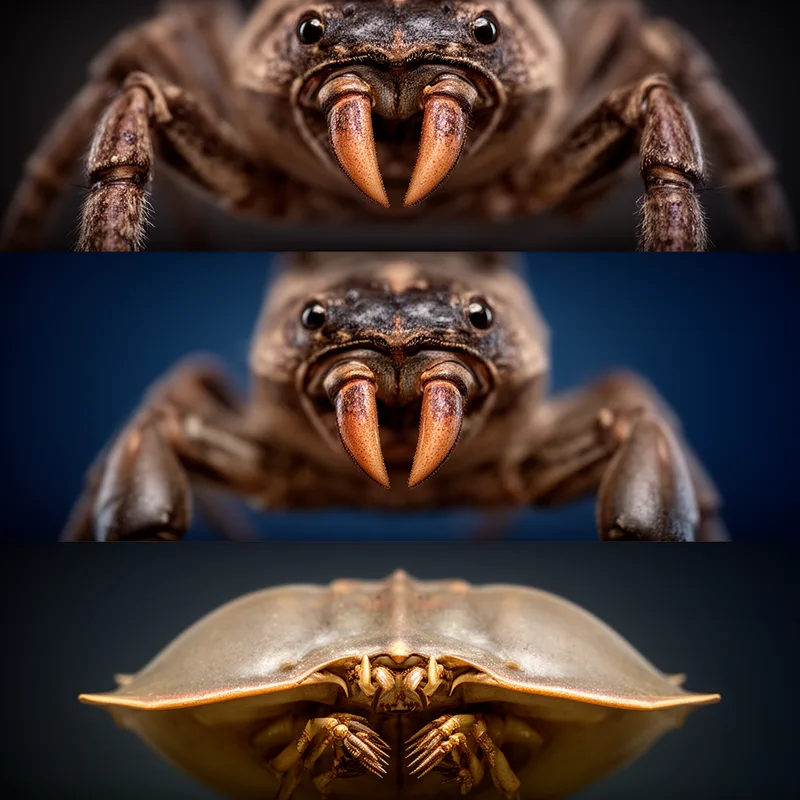
chelicerate
- adjective
- /kəˈlɪsəˌreɪt/
- Specialized
- All spiders are chelicerate animals with distinct mouthparts.
Examples
-
Horseshoe crabs are considered primitive chelicerate arthropods.
-
Scientists studied the fossil to determine whether it belonged to a chelicerate group.
-
The chelicerate anatomy of spiders is fascinating.
-
Are scorpions considered chelicerate animals?
-
All spiders are chelicerate animals with distinct mouthparts.
-
Horseshoe crabs are considered primitive chelicerate arthropods.
-
The chelicerate anatomy of spiders is fascinating.
Synonyms
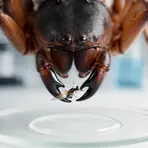
Relating to the small jawlike mouth parts of spiders or scorpions
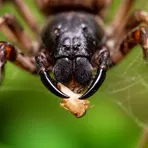
Having special front mouthparts like small claws used to hold and eat food, as in spiders and scorpions
Surface Forms
Morphology
Etymology
Chelicerate comes from the name chelicerae, the claw-like mouthparts of spiders and their relatives, from an old Greek root meaning 'claw' or 'pincer'. So a chelicerate animal is one that has those claw-like mouthparts.

