
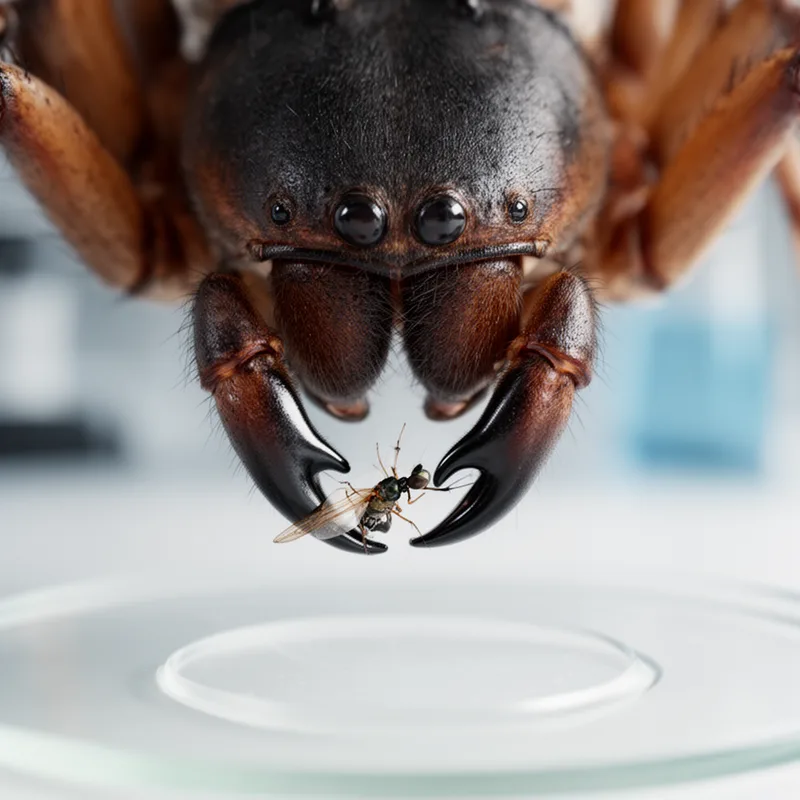
cheliceral
- adjective
- /kəˈlɪsərəl/
- Specialized
- The spider uses its cheliceral fangs to inject venom into its prey.
Examples
-
The fossil displayed well-preserved cheliceral structures, helping to identify the species.
-
Scientists studied the cheliceral movement in scorpions under a microscope.
-
The cheliceral structure of the spider is fascinating.
-
Many arachnids have cheliceral appendages that aid in feeding.
-
The scientists observed the cheliceral function of the scorpion during feeding.
-
Her research focused on the unique cheliceral features that differentiate various spider species.
-
Many species use their distinctive cheliceral adaptations for capturing prey.
Synonyms
Having mouthparts like the small pincers near the mouths of spiders and scorpions
Having special front mouthparts like small claws used to hold and eat food, as in spiders and scorpions
Surface Forms
Morphology
Etymology
Cheliceral comes from Greek parts cheli- 'claw' and -cera 'horn'. So, something called cheliceral has mouthparts that look like small claws or fangs, as in spiders and scorpions.

