
chelation
8.7
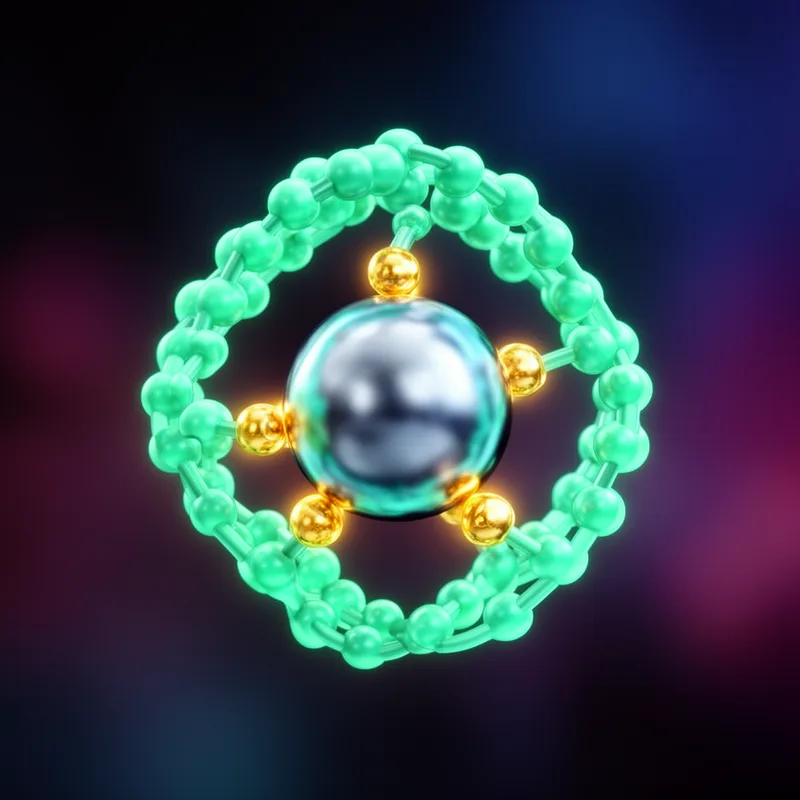
When a molecule holds a metal at several points, forming a ring around it
- noun
- /kiˈleɪʃən/
- Specialized
:
quelación
- Agricultural practices utilize chelation to improve the solubility of micronutrients, making them more accessible to plants.
Examples
-
The process of chelation is often used in medicine to bind toxic metals and facilitate their removal from the body.
-
The mechanism involves iron chelation and the formation of a redox-active compound that promotes the formation of reactive oxygen species (ROS) and leads to cell death.
Academic text (2008) -
Diagram: Figure 2. Chelation of iron with deferoxamine.
Academic text (2007) -
In hemoglobin, chelation occurs when iron forms bonds that create a stable ring structure essential for oxygen transport.
Synonyms

8.9
Molecules or ions join to form a complex compound
is narrower needing several bonds to one metal ion and creating a ring
How Many Bonds


Surface Forms
chelation singular
chelations plural
Morphology
Etymology
Chelation comes from the Greek root chel-, which means 'claw'. In chemistry it describes a substance that 'wraps' its parts like claws around a metal ion to form a ring, so the metal is held tightly in the centre.