

chaffinch


 1
9.7
1
9.7
- noun
- /ˈtʃæf.ɪntʃ/
- UK
- The male chaffinch has a distinctive blue-grey cap and pinkish underparts.
- chaffinch nest
Examples
-
The nest of a chaffinch, for example, has a mossy wall; feathers, hair, and plant down line the inside of this wall.
Academic text (1994) -
The chaffinch, for example, employs silk to attach a cover of lichens to the mossy cup of its nest.
Academic text (1994) -
The chaffinch, a common garden and woodland species, is one of them.
Academic text (1994) -
So the chaffinches are being selective, but what is the basis of their choice?
Academic text (1994) -
Chaffinch nests are generally well supported below and at the sides by small twigs, but the silk provides additional security.
Academic text (1994) -
The chaffinch's technique of nest attachment pales in comparison with the sophisticated arrangements of some tropical species.
Academic text (1994) -
In spring, you can often hear the cheerful song of the chaffinch in the garden.
-
A chaffinch usually builds its nest in dense shrubs to protect its young from predators.
Synonyms
 1
9.9
1
9.9
A small songbird like a chaffinch that sings cheerfully
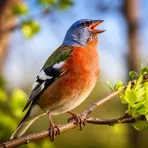
A small European finch with a cheerful song
Surface Forms
Morphology
Etymology
The word chaffinch comes from the older words chaff and finch. Here chaff means 'grain husks' and the bird was often seen feeding among those husks in fields, so the name tells us it is a small finch you find in farmland.