

cephalosporin
 1
6.6

- noun
- /ˌsɛfələˈspɔrɪn/
- Specialized
- We start our patients on a combination of a third-generation cephalosporin, penicillin or cloxacillin, an aminoglycoside, and either clindamycin or metronidazole.
- cephalosporin generation
- Third-generation cephalosporins
- broad-spectrum cephalosporins
Examples
-
Antibiotics such as cephalosporins will be used perioperatively and postoperatively for three days.
Academic text (1998) -
Although there is cross-resistance, quinolone resistance is more common in patients who have used broad-spectrum cephalosporins.
Academic text (2005) -
With no other option aside from IV antibiotics, we decided that I would try a cephalosporin.
Blog text (21) -
Both patients had received cephalosporins.
Academic text (1996) -
Blood sample 12 is reacting to the cephalosporin.
-
Before starting the surgery, a first-generation cephalosporin was administered as a prophylactic antibiotic.
Academic text (2012) -
Broad-spectrum cephalosporins were the most commonly prescribed agents in younger children, while macrolide antibiotics were more common in older children.
Academic text (2005) -
Vancomycin should be added to empirical regimens when highly penicillin or cephalosporin-resistant pneumococcal meningitis is suspected.
Academic text (1995) -
The doctor prescribed a cephalosporin to treat the patient's bacterial infection.
-
Many surgeons recommend using a cephalosporin during surgery to prevent infections.
Synonyms
 4
7.0
A broad-spectrum antibiotic that doctors give by injection for serious bacterial infections
 2
8.6
An antibiotic given by injection to treat serious bacterial infections like lung, ear, throat, or urinary infections
 1
7.6
An antibiotic doctors give by injection to treat infections caused by bacteria

 1
7.2
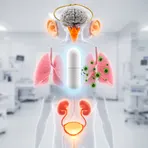
An antibiotic that treats infections of the lungs, throat, ears, urinary tract, and the lining around the brain
 1
5.6
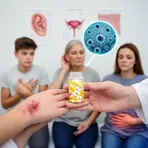
A medicine that treats many infections caused by germs, like skin, ear, and bladder infections
 1
8.4
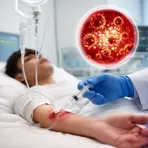
A medicine given by injection that kills harmful germs and treats infections
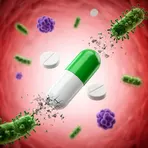
A medicine that kills many types of bacteria to treat infections

An antibiotic that doctors give by injection to treat severe bacterial infections

A medicine that kills bacteria and treats infections
Surface Forms
Etymology
Cephalosporin comes from the name of a fungus and breaks into cephalo- 'head' and spora 'spore'. So these antibiotics are called that because they were first found in a fungus that makes spores.