

cepe
- noun
- /ˈseɪp/
- UK
- MARGUERITE: Hassan, it's not how you sweat the onions, it's where you pick your cepes.
- cepe mushrooms
Examples
-
HASSAN: Marguerite, remember that perfect recipe for the raw cepe ravioli?
-
At the market, I found fresh cepes that were perfect for making a flavorful risotto.
-
And also, I want a feuillete, with a cepe, because this...
-
All the cepes are sold.
-
They looked like cepes to me.
-
These cepes, they're right there.
-
Many of the main varieties are well known outside China: the shiitake, the oyster mushroom, the cepe, and the morel.
Academic text (1990) -
Cepes, oyster mushrooms, shiitake, enoki—these and other celebrated natives of Europe and Asia are now ours, for a price.
Academic text (1990) -
Many chefs consider the cepe to be one of the finest mushrooms for cooking due to its rich flavor.
-
The chef prepared a delicious pasta dish featuring sautéed cepes and garlic.
Synonyms

 6
6.2
6
6.2

A wild mushroom with a thick stem and a rich nutty taste used in cooking
 1
7.7
1
7.7
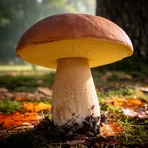
A large wild mushroom with a thick stem and brown cap that you can eat

 1
9.9
1
9.9
A mushroom with a thick stem and spongy pores under the cap

A large mushroom that is safe to eat with a thick stem and a rounded cap often called porcini

A fleshy mushroom with a spongy underside of small holes, including edible and poisonous kinds
How Edible

Surface Forms
Etymology
Cepe comes from French cèpe, and that likely comes from an old southern French word cep meaning 'stump'. So, it is easy to remember: these big, edible mushrooms often grow by tree roots or stumps, and the name points to where you find them.