
celiac


 1
7.7
1
7.7
- adjective
- /ˈsiːliæk/
- Specialized
- My husband and I (a celiac person) eat at Jason's almost every week.
Examples
-
I mentioned celiac because it's autoimmune, but only a minority, only a few patients actually have celiac.
-
I am glad you are approaching this scientifically, and I think in the end you seem like you want to really know if it's celiac or not.
Blog text (12) -
He has been tested and is not celiac.
Blog text (12) -
According to my severely celiac friend (with extremely celiac children), there is a genetic test for this.
Blog text (31) -
According to my severely celiac friend (with extremely celiac children), there is a genetic test for this.
Blog text (31) -
But because I've also had other autoimmune issues, I know it's best not to mess with gluten if I am indeed celiac.
Blog text (12) -
There is so much we don't know about celiac and non-celiac gluten sensitivity (my opinion).
Blog text (17) -
(Celiac sprue is diagnosed by biopsy, which is obtained from endoscopy or colonoscopy.
Blog text (31) -
Research is ongoing, but it's perfectly plausible that this could cause a variety of intestinal discomforts that, although not autoimmune in nature like celiac disease, would nevertheless be real.
Blog text (7) -
The doctor explained that celiac conditions can significantly affect digestion and overall health.
Synonyms
 140
3.9
140
3.9
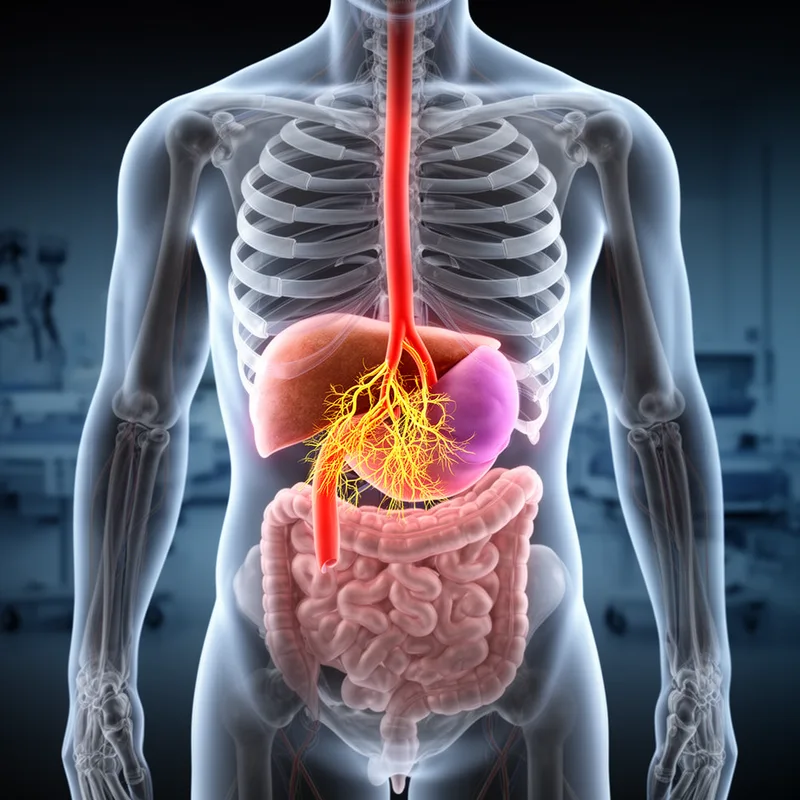
Relating to the belly area of the body
Compounds

- Specialized
9
3.7
A condition where the immune system reacts to gluten and damages the small intestine making it hard to absorb nutrients
- Specialized
A large blood vessel in the belly that carries blood to the stomach, liver, and spleen
- Specialized
Large blood vessel in the abdomen that comes from the main artery and supplies the stomach, liver, and spleen
Surface Forms
Morphology
celiac = celi + ac
Formed from the medical combining form 'celi-' plus the adjectival suffix '-ac'; the combining form is not a standalone English word and the anatomical sense is not transparently derivable by an average B1 learner.
Etymology
Celiac comes from the Greek root koilia, which means 'belly' or 'abdomen', so it is used for parts and areas in the abdominal cavity like the celiac artery and celiac plexus.