
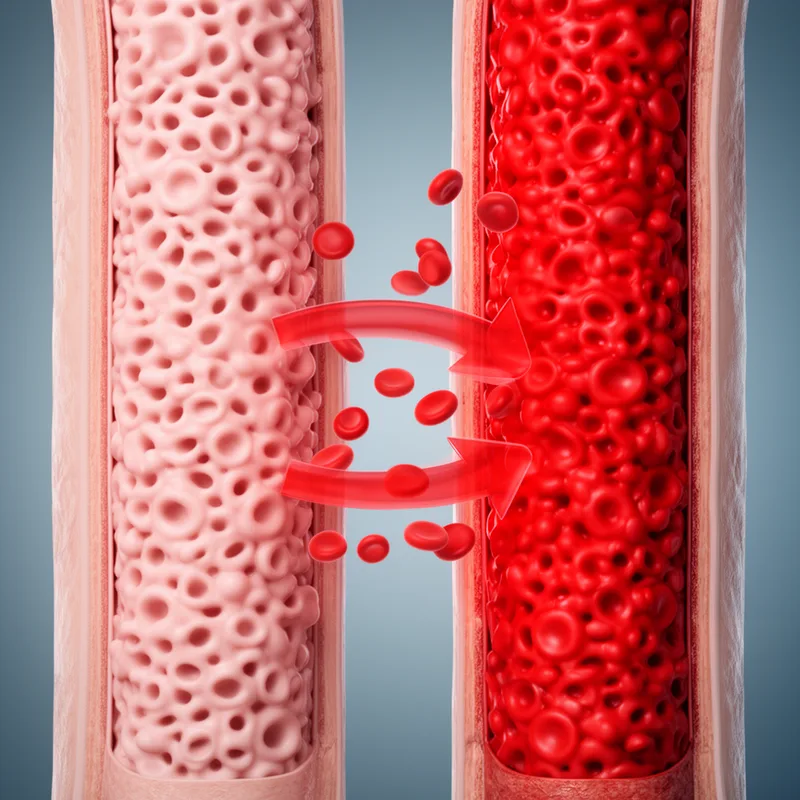
cavernous
 2
8.0
2
8.0

- adjective
- /ˈkævərnəs/
- Specialized
- Hemangiomas, including the more common capillary and cavernous forms, are hamartomatous lesions.
- cavernous sinus
- cavernous hemangioma
- cavernous sinus thrombosis
Examples
-
A cerebral angiogram showed an area of opacification within the anterior aspect of the left cavernous sinus consistent with thrombosis.
Academic text (2006) -
Soft-tissue cavernous hemangiomas are hyperintense on both T1- and T2-weighted MRIs, owing to their fatty content.
Academic text (2008) -
The mass was diagnosed as a cavernous hemangioma. Discussion
Academic text (2008) -
There have been two cases of a similar cavernous hemangioma of the optic nerve in which growth was documented.
Academic text (2005) -
Histologic examination identified the tumor as a cavernous hemangioma.
Academic text (2008) -
In this article, we describe a case of cavernous hemangioma that appeared as a cystic mass in the middle turbinate.
Academic text (2008) -
Histologically, cavernous hemangiomas appear as closely packed, dilated vascular channels lined with a layer of flattened endothelial cells.
Academic text (2008) -
Histologic examination revealed closely packed, dilated, and congested cavernous vascular channels lined with a layer of flattened endothelial cells.
Academic text (2008) -
The cavernous spaces in the tissues can fill with blood during an erection, making them firm.
-
The doctor explained how the cavernous tissue in the penis allows for erection by swelling with blood.
Synonyms
 19
6.8
19
6.8
Able to become hard and larger when filled with blood, like the penis
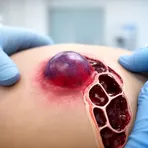
A tumor or growth that has large spaces filled with blood
Compounds

- Specialized
1
8.2
A large area of veins on each side of the pituitary gland that drains blood from the brain and face
How Cavernous

Surface Forms
Morphology
Etymology
Cavernous comes from the old Latin word caverna meaning 'cave' or 'hollow', and is like the English words cave and cavity. In medicine, 'cavernous' describes tissue with small 'caves' or spaces that can fill with blood and become firm, which explains its use for erectile tissue.