
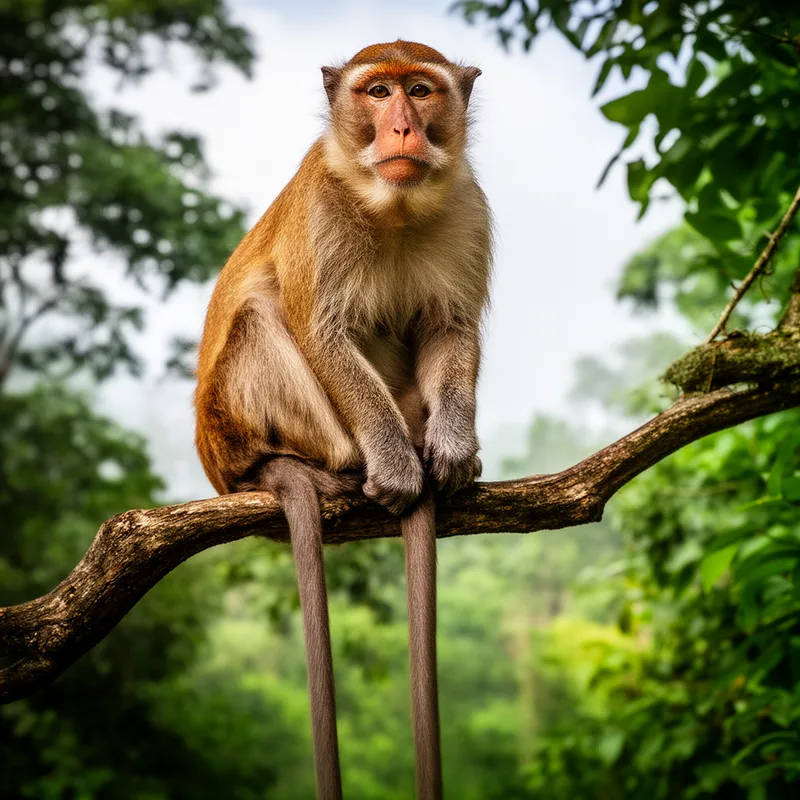
catarrhine
- noun
- /kəˈtɑːraɪn/
- Specialized
- Scientists believe that catarrhines, such as baboons and macaques, display unique social behaviors that fascinate researchers.
Examples
-
Scientists compared the dental patterns of catarrhine and New World monkeys to study their evolution.
-
Unlike platyrrhines, catarrhines have downward-facing nostrils and nonprehensile tails.
-
Gibbons and baboons are examples of catarrhine primates found in Asia and Africa.
-
The catarrhine species are fascinating to study.
-
Many catarrhines live in the forests of Africa.
-
The catarrhine species found in Africa often have distinctive facial features and lively social interactions.
-
Compared to new world monkeys, catarrhines are characterized by their downward-facing nostrils and lack of prehensile tails.
Synonyms
A monkey from Africa or Asia with a tail that cannot hold things and nostrils close together on the nose
Surface Forms
Etymology
Catarrhine as a noun comes from Greek parts cata- 'down' and rhin- 'nose', so it literally means 'down-nosed'. That's why scientists call monkeys and apes from Africa and Asia catarrhines—they have downward-facing nostrils and tails that cannot hold things.

