

carob bean tree
- noun
- /ˈkɛrəb bin tri/
- The carob bean tree thrives in warm Mediterranean climates and produces pods that are sweet and nutritious.
Examples
-
Many people enjoy the pods of the carob bean tree as a chocolate substitute.
-
Farmers often plant the carob bean tree as a drought-resistant crop alternative.
-
Ancient texts refer to the carob bean tree as the "St. John's bread" due to its historical significance.
-
The carob bean tree is native to the Mediterranean region.
-
The carob bean tree grows in many Mediterranean gardens, providing shade and edible pods.
-
Farmers value the carob bean tree for its ability to withstand dry conditions while producing nutritious pods.
-
In culinary recipes, the sweet pods of the carob bean tree are often used as a healthier alternative to chocolate.
Synonyms

 1
7.2
1
7.2

A tree that keeps green leaves all year and makes long edible pods
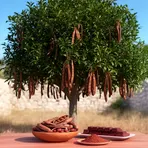
A tree that keeps its leaves all year and makes sweet pods used like chocolate

A Mediterranean evergreen tree with edible pods used instead of chocolate

A Mediterranean tree that always has green leaves and grows sweet edible pods used like chocolate
Surface Forms
Morphology
The meaning is directly compositional: 'carob' (the plant/pods) + 'bean' (pod/seed) + 'tree' (woody plant) yields a tree that produces carob beans/pods. This noun‑noun compounding is a straightforward, cross‑linguistically common pattern, so a B1 learner who knows the constituents will readily infer the meaning.
Etymology
Carob bean tree The name carob bean tree comes from the sweet, brown pods called carob that look like large beans and were eaten long ago. People long ago used the tree's tiny seeds as a weight for gold and gems, and that gave the word 'carat'. So the name simply points to a tree with sweet, bean-like pods.