

cardiovascular disease
 15
3.5
15
3.5

- noun
- /ˌkɑrdioʊˈvæskjʊlər dɪˈziːz/
- Specialized
- The doctor explained that regular exercise can help reduce the risk of cardiovascular disease.
- cardiovascular disease risk
- patients with cardiovascular disease
- mortality from cardiovascular disease
Loading YouTube…
Watch on YouTubeIn men, cardiovascular disease starts younger but levels off.
- In men, cardiovascular disease starts younger but levels off.
- And there are preventive strategies for cardiovascular disease.
- They cause diabetes, they cause cardiovascular disease, and they produce symptoms of mental illness.
- And is there a distinction between plaque buildup and cardiovascular disease?
- To what extent is dementia a result of circulatory disease in the way that cardiovascular disease is?
- Moreover, smoking causes all sorts of other diseases, emphysema, kidney diseases, cardiovascular diseases.
- And the two most long term consequences that we have insight into are the impact that sleep deprivation has on cardiovascular disease and Alzheimer's disease.
- So if you get cardiovascular disease or cancer or neurologic disease, it's harder to sustain your fitness.
- But I have not found a study on fiber and cardiovascular disease and cancer and mortality where it did not show improvements from higher fiber.
- So contrast that with cardiovascular disease where you know you have this Apo B biomarker, you, you understand the pathophysiology of how it works.
- These are high, high risk for cardiovascular disease and or for basically for heart attack.
- Most people think more cholesterol, more cardiovascular disease.
- Elevated blood pressure is a risk factor for the diseases such as cardiovascular disease, dementia, diabetes.
Examples
-
Over 17 million people die every year from cardiovascular disease.
-
Diabetes is also a risk factor for other medical conditions, including cardiovascular disease and stroke.
Academic text (1995) -
Let me start by saying something about risk factors for cardiovascular disease in low and middle income countries.
-
In men, cardiovascular disease starts younger but levels off.
-
Surprisingly, cardiovascular disease accounted for most of the deaths in elders in all three groups.
Academic text (2000) -
For instance, many will likely develop high blood pressure and high cholesterol, which increase the risk for cardiovascular diseases.
Academic text (2013) -
The risk of death was highest in patients with cardiovascular disease and a 4.0 g/dL or more decline in hemoglobin.
Academic text (1999) -
For every employee that dies from industrial accidents, 50 die from cardiovascular disease (Cohen, 1985).
Academic text (1991) -
Approximately 980,000 Americans die each year from cardiovascular disease (Hafen and Karren 1990).
Academic text (1992) -
Every year, cardiovascular disease affects millions of people around the world.
Synonyms
 144
1.9
144
1.9
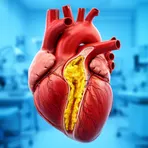
A problem that makes the heart not work well
Surface Forms
Morphology
The noun phrase is fully compositional: 'cardiovascular' (related to the heart and blood vessels) combined with 'disease' (a pathological condition) clearly yields 'a disease affecting the heart or blood vessels.' This follows common medical compounding patterns found across languages, so a B1 learner who knows the constituents can readily infer the meaning.
Etymology
Cardiovascular disease comes from the parts cardio meaning 'heart' and vascular meaning 'blood vessels'. It literally names problems with the heart or the tubes that carry blood, so it means 'a disease affecting the heart or blood vessels'.