

cardiopulmonary
 4
4.9
4
4.9

- adjective
- /ˌkɑrdiəˈpʌlməˌnɛri/
- Specialized
- We have the professional knowledge to implement evidence-based practice initiatives to support outcomes related to surviving a cardiopulmonary arrest.
- cardiopulmonary resuscitation
- cardiopulmonary bypass
- cardiopulmonary arrest
Examples
-
Very ill patients who experience a cardiac arrest and receive cardiopulmonary resuscitation (CPR) have a very small chance of recovering.
Academic text (1994) -
Exercise training work rates are increased as tolerated to provide continuous overload to the musculoskeletal and cardiopulmonary systems.
Academic text (1995) -
Assess and manage a patient in cardiopulmonary failure or arrest.
Academic text (2017) -
BACKGROUND: Exposure to wildfire smoke has been associated with cardiopulmonary health impacts.
Academic text (2013) -
In conclusion, changes seen on the horizon will improve survival rates from cardiopulmonary arrest with intact functional status and good quality of life.
Academic text (2007) -
His or her minimum annual training needs include sessions in basic immunization, travel health, and cardiopulmonary resuscitation/anaphylaxis.
Academic text (2012) -
In this sedentary state, a rapid deterioration in the cardiopulmonary systems occurs.
Academic text (2000) -
Critical care will consist of IV fluids, respiratory support, cardiopulmonary monitoring, and possibly the use of anti-inflammatory steroids.
Academic text (2005) -
The patient denied fevers, chills, nausea, vomiting, diplopia, and cardiopulmonary symptoms.
Academic text (2008) -
The doctor emphasized the importance of cardiopulmonary health for overall well-being.
Synonyms

 1
4.9
1
4.9
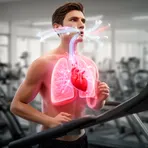
Relating to the heart and the lungs and how they work together
Compounds

- Specialized
1
3.7
A medical emergency method using chest pushes and mouth breaths to restart a person's heart and breathing

- Specialized
1
5.4
When the heart and lungs suddenly stop working, breathing and heartbeat stop

- Specialized
Exercise that makes the heart and lungs stronger and helps blood and breathing work better
Surface Forms
Morphology
cardiopulmonary = pulmonary (semi-transparent) = cardio + pulmon + ary
The term is built from the medical combining form 'cardio-' plus the recognizable base 'pulmonary', but the result is still a specialized technical adjective.
Etymology
The word cardiopulmonary combines cardio-, which comes from a Greek word for 'heart', and pulmo-, which comes from a Latin word for 'lung'. So cardiopulmonary describes something that affects both the heart and the lungs, as in CPR.