
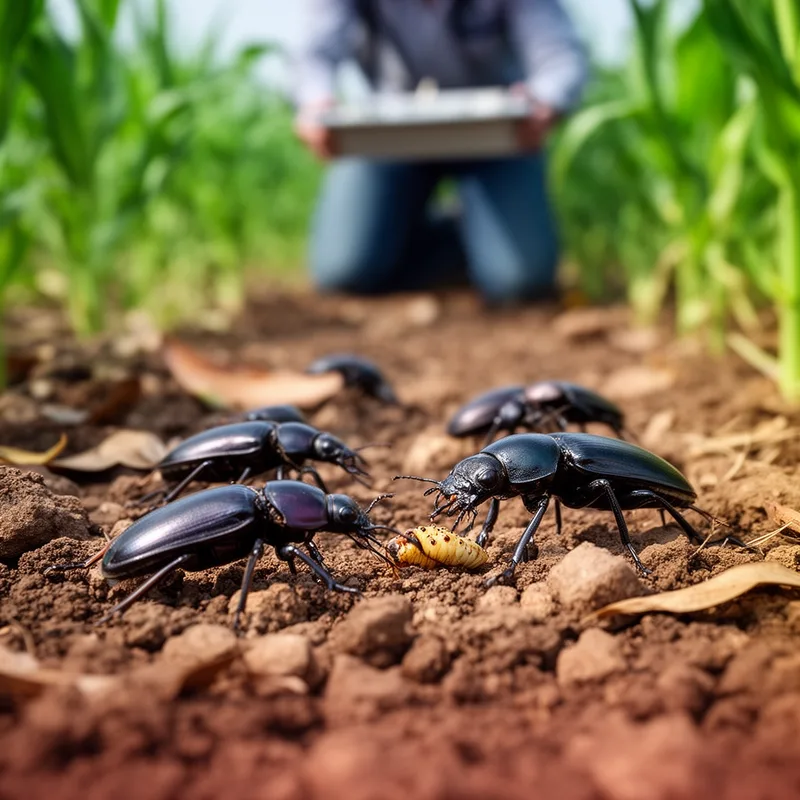
carabid
- adjective
- /ˈkɛrəˌbɪd/
- Specialized
- Many carabid species are important for controlling agricultural pests.
Examples
-
The carabid population increased after the new conservation measures were introduced.
-
Scientists studied carabid diversity in different types of forest habitats.
-
The carabid beetle is known for its predatory behavior.
-
Scientists study carabid species to understand their role in ecosystems.
-
Researchers documented various carabid behaviors during their observations in the field.
-
The carabid characteristics make them excellent natural pest controllers in gardens.
-
Entomologists examine the carabid traits that contribute to their survival in harsh environments.
Compounds
A ground beetle usually black or shiny that eats other insects and helps control pests
Surface Forms
Morphology
carabid = Carabidae (opaque) = carab + id
Formed from the taxonomic name 'Carabidae' with the taxonomic suffix '-id'; the formation and meaning are specialized and not derivable by an average B1 learner.
Etymology
The word carabid comes from the family name Carabidae used by scientists, and that name comes from the old Greek word karabos meaning 'beetle' or 'crab'. So carabid means 'of that group of beetles', which helps you remember it describes things relating to these ground beetles.

