
capillarity
- noun
- /ˌkæpɪˈlɛrɪti/
- Specialized
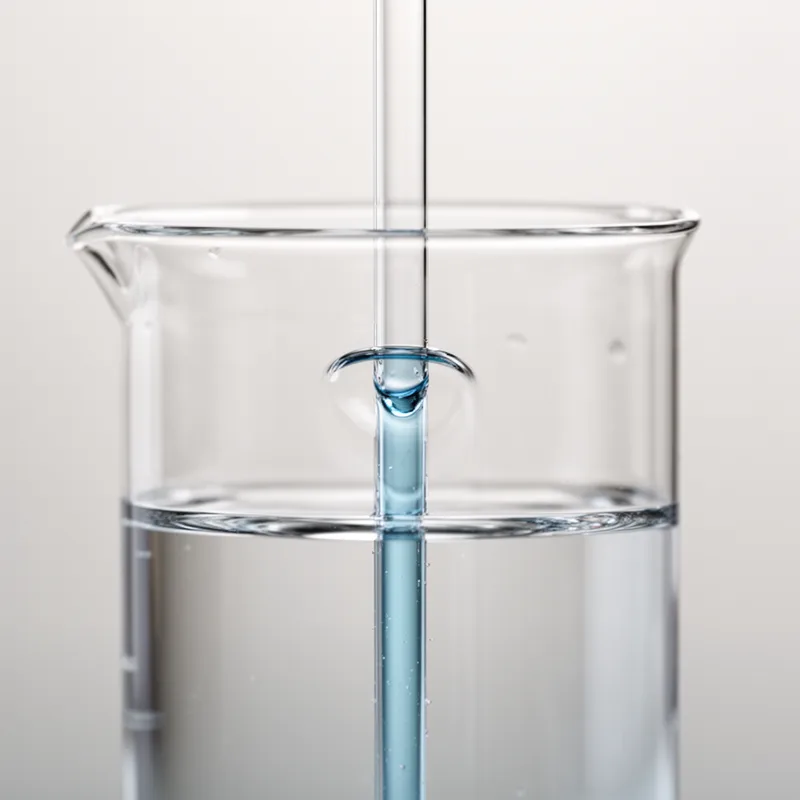
- In a narrow glass tube, capillarity enables liquid to climb higher due to the forces of surface tension.
Examples
-
The overall trend on the free-surface side of capillarity research has been a shift from static shapes to the dynamics of free-surface flows, breakup, and fragmentation.
Academic text (2006) -
Capillarity causes capillarity to rise in a thin tube, allowing plants to absorb moisture from the soil.
-
The two works also emphasize quite different aspects of capillarity, which provide the general division of this article:
Academic text (2006) -
Capillarity is a manifestation of the cohesion of matter due to strong, short-ranged forces between adjacent particles.
Academic text (2006) -
An obvious manifestation of capillarity is the formation of drops from the rupture of liquid threads, ligaments, and jets, as illustrated in figure 5.
Academic text (2006) -
Several studies have demonstrated the efficacy of LLLT in accelerating the healing process, the promotion of analgesia, and an increase in microcirculation and capillarity (5, 6, 11).
Academic text (2015) -
Two centuries after seminal work by Pierre-Simon Laplace and Thomas Young, capillarity's modern applications arise in fields ranging from biology and oceanography to propulsion, materials science, and novel devices.
Academic text (2006) -
The phenomenon of capillarity can be observed when a paper towel dips into water and absorbs it quickly.
Synonyms

 1
5.8
1
5.8

Movement of liquid up thin tubes or spaces, like water rising in a plant stem
Surface Forms
Morphology
Etymology
Capillarity comes from the Latin capillus, which means 'hair', and the same root is in capillary. Think of very thin tubes like hairs that pull water up or down, so capillarity is the way a liquid rises or falls in tiny tubes.