
cantus
- noun
- /ˈkæn.təs/
- Specialized
- Counterpoint problems on the AP Music Theory Exam may require choosing the best counterpoint to a given cantus firmus.
- cantus firmus
Examples
-
Bach used the "Credo" from Liber Usualis as the cantus firmus and as a unifying element in this movement of the B Minor Mass.
Academic text (2003) -
Characteristically, the cantus firmus is the plainchant tune with an elongated rhythm.
Academic text (2003) -
Review plainchant and cantus firmus.
Academic text (2003) -
That is called Cantus Firmus, or Cantu firmus.
-
Assign students to groups to research cantus firmus, J. S. Bach, and B Minor Mass and present information to the class.
Academic text (2003) -
The input layer represents the notes coming from the cantus firmus, and the output layer represents the new counterpoint generated.
Academic text (2018) -
The evaluation is made by taking a cantus firmus and comparing examples from the book of Jeppesen & Glen 60.
Academic text (2018) -
In polyphonic music, the cantus serves as the main melody that supports other harmonies.
-
Many composers, including Bach, often used a cantus to create intricate musical variations.
-
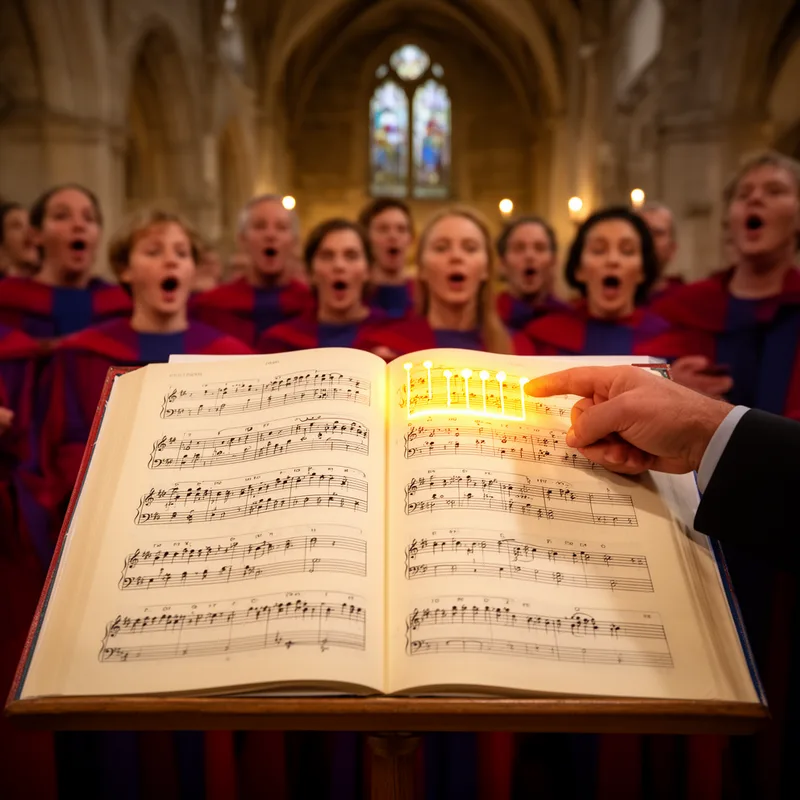
The church choir practiced the cantus for weeks before the special service to ensure a perfect performance.
Synonyms

 146
1.8
146
1.8

A series of musical notes that form the main tune of a song

An older melody used as the main tune under other musical lines

The highest singing part in a choir, often the main melody
Compounds
How Central

Surface Forms
Etymology
Cantus comes from the Latin canere, which means 'to sing'. In medieval music a cantus was the main, fixed melody often taken from a church chant, so thinking of it as the 'song' at the center helps you remember its musical role when other voices join around it.