
canon
 2
8.8
2
8.8

- noun
- /ˈkænən/
- Formal
- Taken together, it can be said that the 102 Trullan canons leave hardly any aspect of ecclesial and social life untouched.
Examples
-
Damian exhorted Pope Leo IX to enforce the canons of church law on the scandalous matter of priests seducing boys and young men.
Academic text (2004) -
The bishops at Constantinople repeatedly declared their loyalty to the Council of Chalcedon (canons 5, 6, 11, and 14).
Academic text (1991) -
In addition to psychology and canon law, bishops also turned to civil attorneys for guidance.
Academic text (2004) -
Many of the abuses he worked to correct resulted from the lack of order in the collections of canon law.
Academic text (2004) -
Without any uniform standards of canon law, bishops were able to rule their dioceses absolutely as they personally saw fit.
Academic text (2004) -
Incarceration became part of the law of the Church with the inception of canon law.
Academic text (2004) -
As far as excommunication... do you know anything at all about the Catechism or canon law, Frank?
Blog text (13) -
Seen from this perspective, the scandal has arisen both from deficiencies in canon law and from the individual weaknesses of clerics.
Academic text (2004) -
For example, Gratian, following Ivo's lead, included 16 canons of the Council in Trullo in his Decretum.
Academic text (2010) -
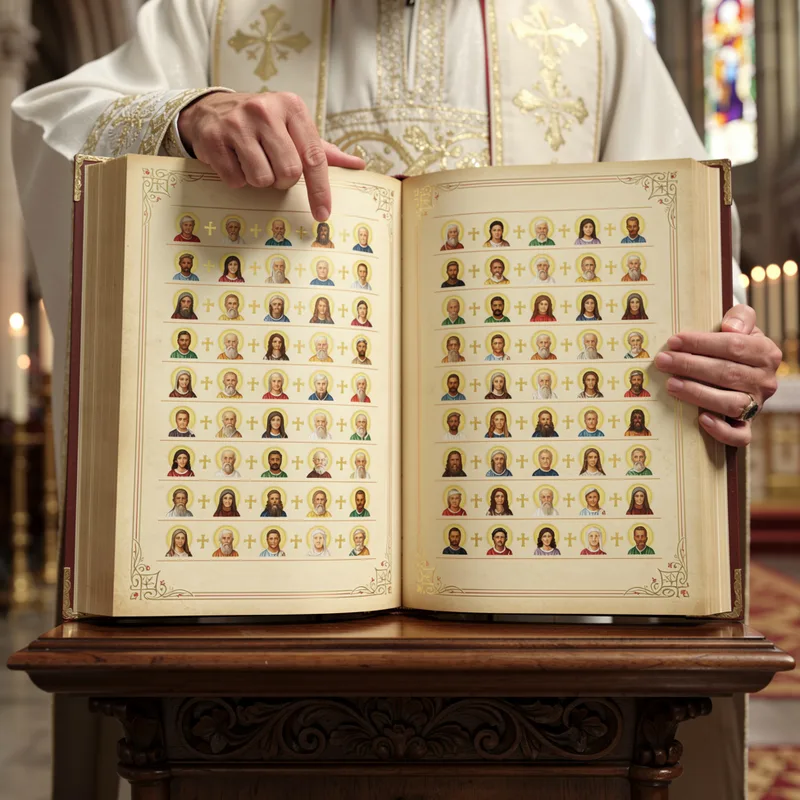
The church published its new canon listing the saints officially recognized this year.
Compounds


- Archaic
A musical piece where the voices follow hidden instructions written as riddles

- Specialized
A musical piece where players solve clues to know when to start playing
How Official

Surface Forms
Etymology
Canon comes from the Greek kanon, meaning 'rule' or 'list'. In the church this led to an official list of holy people, so the canon of saints is the list of those the church recognizes.