
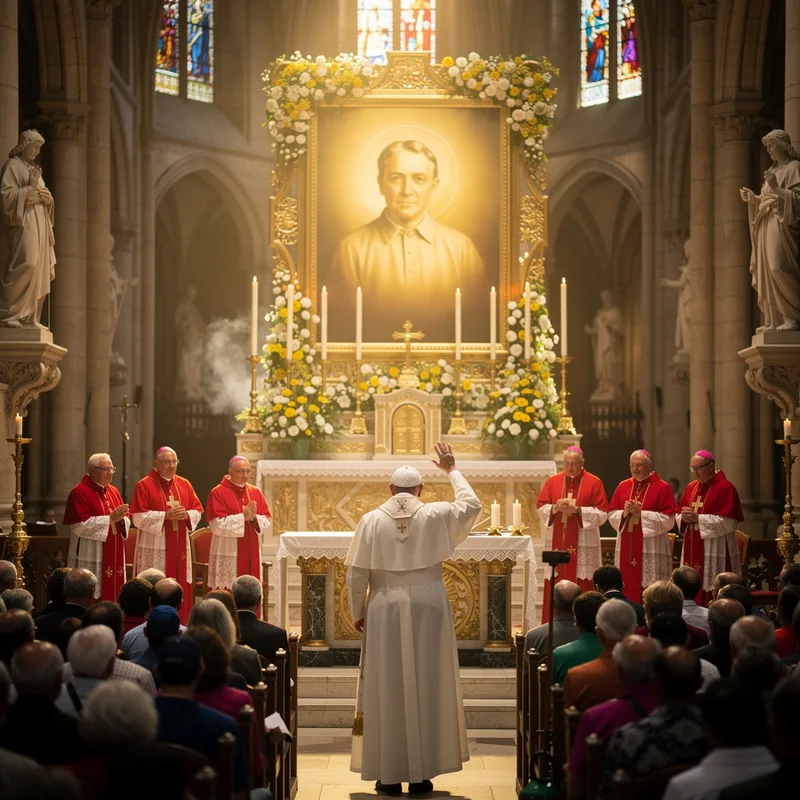
beatification
 3
9.9
3
9.9

- noun
- /ˌbiːətɪfɪˈkeɪʃən/
- Formal
- Bishop Joseph Santori's reputation for holiness was so widespread that after his death, a petition was signed to ask the Holy See to consider him for beatification, a cause that remains active today.
Examples
-
Many people traveled to witness the beatification of the local priest, who was praised for his charitable works.
-
Her supporters, including numerous cardinals and Prince James Edward Stuart, the Old Pretender, continued to press for her beatification in the 18th century.
Academic text (1994) -
The process for her beatification was begun in October 1685, only a few months after her death.
Academic text (1994) -
In the case of sainthood, there is the intermediate stage of beatification.
Academic text (2000) -
Lisabeth Nicolet had been proposed for beatification.
Fiction book (2000) -
His 1990 and 2002 trips to Mexico included the beatification and canonization of Juan Diego, respectively.
Academic text (2009) -
She prayed she might live long enough to see the beatification, if not canonization, of one of her own.
Fiction book (1990) -
A local girl was supported for beatification, and after this was conferred, a new procession, new chapel, and a new festival tradition were inaugurated.
Academic text (1999) -
In 1990, Yad Vashem recognized him as Righteous among the Nations, and in 2001, the Catholic Church opened a process of beatification.
Blog text (6) -
The Pope announced the beatification of the revered nun during a special ceremony in Vatican City.
How Official

Surface Forms
Morphology
Etymology
Beatification comes from the Latin beatus 'blessed' and facere 'to make'. In the Catholic Church, beatification is the official act when the Pope declares a dead person 'blessed', which is the first step toward sainthood.