
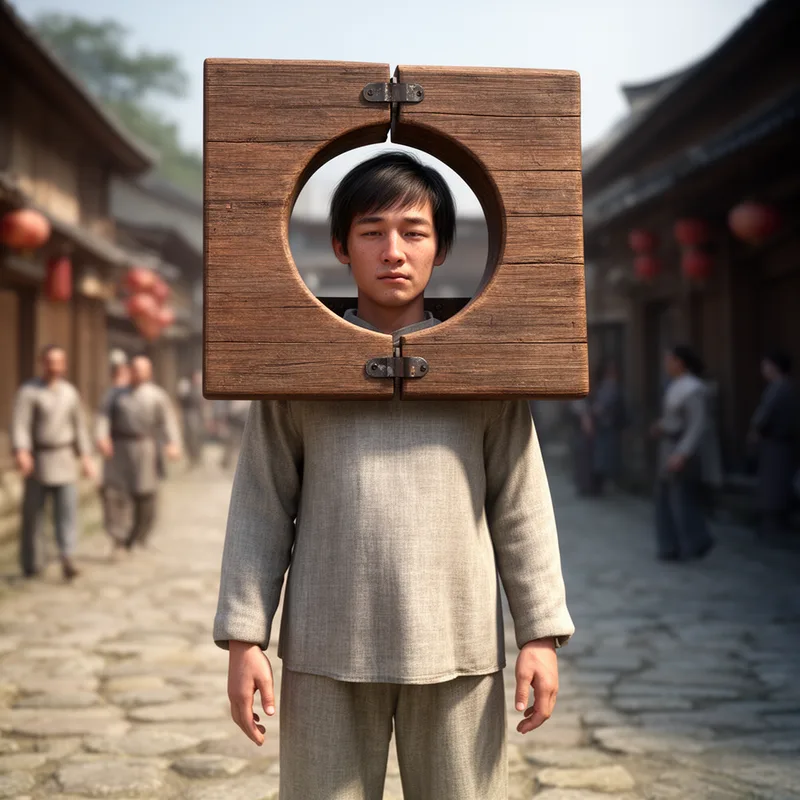
cangue
- noun
- /kæŋɡ/
- Archaic
 :
canga
:
canga
- Historians have studied the use of the cangue in traditional Chinese legal systems.
Examples
-
A wooden cangue hung on display in the museum's section on early justice.
-
The cangue was heavy.
-
The prisoner was forced to wear a cangue for several days as part of his punishment.
-
Can you see the cangue?
-
In ancient China, criminals were often forced to wear a cangue, a heavy wooden collar that restricted their movement.
-
The cangue used in the punishment was so heavy that it made it difficult for the man to lift his head.
-
During the Qing dynasty, the cangue became a symbol of shame for those who had committed crimes.
Synonyms

 3
7.7
3
7.7

Metal cuffs that hold a prisoner's hands or legs together
 3
6.9
3
6.9
A heavy iron ball attached to a prisoner's leg by a chain

A heavy wooden frame that holds a person's feet for public punishment
Surface Forms
Etymology
Cangue comes from Portuguese canga, meaning 'yoke' or 'wooden collar' used to hold people or animals, and it named the heavy wooden collar used in China as a punishment and public shame. So a cangue is like a neck yoke that kept a person's head and sometimes their arms locked in place.