

calciferous
- adjective
- /ˌkælˈsɪfərəs/
- Specialized
- Limestone is a type of calciferous rock that is commonly used in construction.
Examples
-
The geologist studied the calciferous layers of sediment to understand the area's history.
-
In this way, he continued to occupy the hottest spot of the pool for the next 90 minutes, muttering to himself the entire time, until he finally stood up and concluded his soak by massaging his private parts against calciferous rock that rose up from the pool.
Blog text (17) -
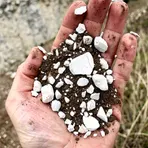
Plants thrive in calciferous soils because they provide essential calcium for growth.
Synonyms
 2
8.9
2
8.9

Something that contains material like chalk or limestone

Containing calcium, a mineral found in bones and shells

Containing a lot of the mineral calcite
Surface Forms
Morphology
calciferous = calci + fer + ous
This is a classical scientific formation built from bound elements meaning roughly 'lime/calcium' + 'bear' + adjectival '-ous', but the components are not transparent to an average B1 learner.
Etymology
Calciferous comes from two Latin parts: calc- meaning 'lime' or 'chalk' and the same root as calcium, and -ferous meaning 'to bear' or 'carry'. So calciferous means 'bearing calcium', which is why we use it for soils or rocks that have a lot of calcium.