
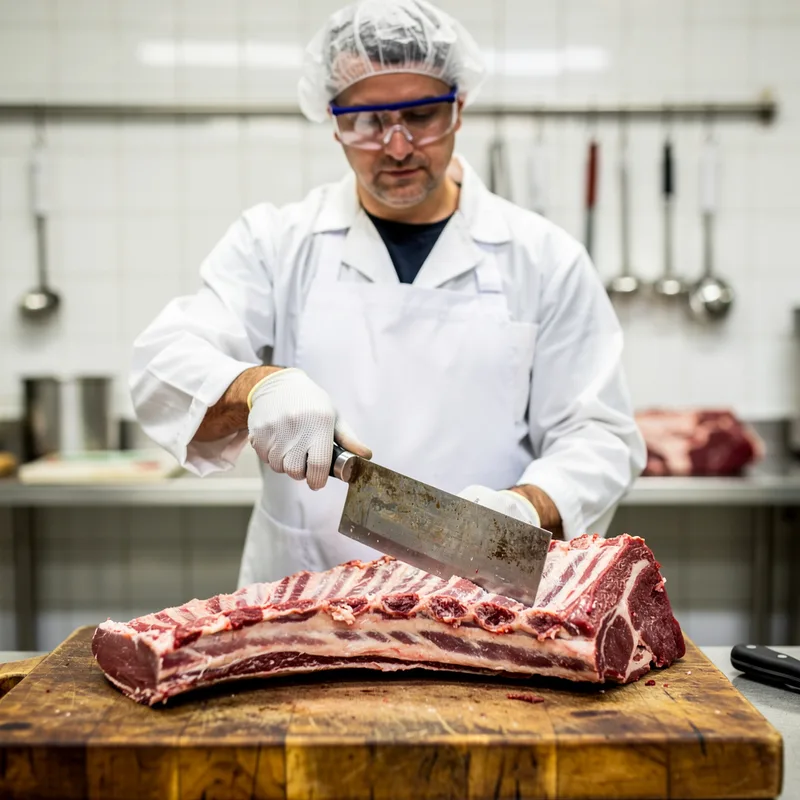
to butcher
 22
1.8
22
1.8

- verb
- /ˈbʊtʃər/
- Though in a few hours this baby goat too would be butchered, prepared for the Christmas table.
Loading YouTube…
Watch on YouTubeAnd she said when I read Omnivore's Dilemma, I had to learn how to butcher a pig and I did.
- And she said when I read Omnivore's Dilemma, I had to learn how to butcher a pig and I did.
- A grain fed animal that's butchered typically will be about will probably less than two years of age.
Examples
-
Using what appeared to be stone knives and scrapers, the group began to butcher the carcass.
Fiction book (2002) -
"What are we going to use to butcher the cow?" I asked him.
Fiction book (1991) -
You had to prepare and butcher sheep and give things away.
Academic text (2004) -
Grandmother decided to butcher it before the heat ruined the meat.
Fiction book (2001) -
So a couple days ago, Mariah and I went and butchered a lamb.
-
The old man butchered the doe, Smathers watching how he relished the wielding of the knife.
Fiction book (2002) -
Els skinned and butchered it with great skill, using her newly made stone knives and scrapers.
Fiction book (2002) -
The chef decided to butcher the lamb himself for the special dinner.
-
He learned how to butcher the deer he hunted, turning the meat into delicious meals.
-
After hunting the moose, they quickly began to butcher it in order to preserve the meat.
Synonyms
 60
3.9
60
3.9
To kill animals for food in large numbers
Antonyms

Compounds


How Violent

Surface Forms
Etymology
Butcher as a verb comes from the same origin and first meant 'to kill animals for meat', so to butcher an animal is to kill and cut it for food. This is the direct action sense behind the noun.