

butcher paper
 1
3.3
1
3.3

- noun
- /ˈbʊtʃər ˈpeɪpər/
- US
- They'd taped butcher paper over the front windows so you couldn't see inside.
- wrapped in butcher paper
- white butcher paper
- butcher paper-wrapped packages
Loading YouTube…
Watch on YouTubeOr you could even use a chalkboard, but I prefer butcher paper.
- Or you could even use a chalkboard, but I prefer butcher paper.
Examples
-
After purchasing the sausages, he noticed they were packaged in butcher paper that resists moisture.
-
They chose to wrap the fish in butcher paper to prevent any leaks during transport.
-
At the bottom of the trunk was a large package wrapped in butcher paper and tied with string.
Fiction book (2000) -
Fred, a tall man whose face reminded me of a tiny wooden mallet, winked as he handed over the dog food rolled in white butcher paper.
Fiction book (1998) -
The butcher carefully wrapped the steaks in butcher paper to keep them fresh for her customers.
Synonyms
 ∞
1.0
∞
1.0
Thin material made from wood pulp used for writing, printing and wrapping
 6
2.5
6
2.5
A thin paper covered in wax used to wrap or line food


 1
3.4
1
3.4
A strong brown paper used for wrapping things and making bags
 1
3.9
1
3.9
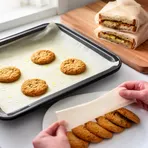
Paper that does not soak up oil and is used to line baking trays and wrap food
How Strong

Surface Forms
Morphology
This is a straightforward noun–noun compound where 'butcher' modifies 'paper' to indicate paper used by butchers; a B1 learner who knows both words can readily infer it is sturdy paper for wrapping meat. The meaning is compositional and follows common cross-linguistic patterns (e.g., 'butcher's paper'), so there is no idiomatic or metaphorical shift.
Etymology
Butcher paper comes from the days when the butcher wrapped fresh meat in thick paper so blood and juices would not leak. That's why today 'butcher paper' means a strong paper used for wrapping meat and other foods.