
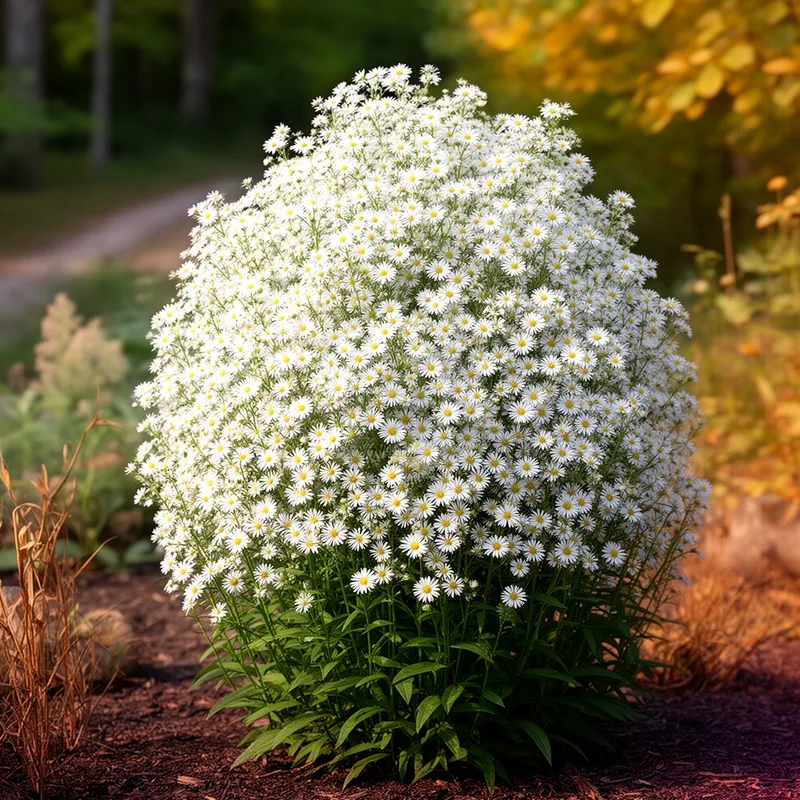
bushy aster
- noun
- /ˈbʌʃi ˈæstər/
- US
- The bushy aster blooms in late summer, brightening gardens with its small white flowers.
Examples
-
We spotted a cluster of bushy asters along the woodland trail.
-
Gardeners often choose bushy aster for its resilience and ability to attract pollinators.
-
Gardeners often choose bushy aster for its hardy nature and decorative appeal.
-
The bushy aster blooms beautifully in late summer.
-
Many gardeners love the bushy aster for its hardiness.
-
The bushy aster blooms in late summer, adding charming white flowers to the garden.
-
We spotted a cluster of bushy asters along the woodland trail, their white flowers creating a lovely sight.
Synonyms

A small plant with stiff stems, small leaves, and many tiny white flowers

A flowering plant with narrow leaves and white flowers at the top

A small plant that comes back each year with white daisy-like flowers

A plant that lives many years, grows in woods, has white flowers, and spreads by underground stems

A small plant that grows in woods with clusters of white star-shaped flowers

A low plant that grows in small clumps and has white flowers each year

A plant that lives for several years with groups of white flowers in fields or meadows

A North American plant that lives for several years and has small white flowers

A small North American plant with white star-shaped flowers

A flowering plant with clusters of small white daisy-like flowers

A small plant from North America that lives for many years with many branches and small white star-shaped flowers
Surface Forms
Morphology
The noun is a straightforward adjective + noun composition: 'bushy' describes a thick, spreading growth habit and 'aster' names the plant, so the meaning is an aster with a bushy form. This compositional pattern is common and predictable cross-linguistically, so a B1 learner who knows both constituents can infer the meaning.
Etymology
Bushy aster is a name that shows how the plant looks: bushy means it grows many stems and looks like a small bush, and aster comes from a Greek word for 'star' because each tiny flower head looks like a little star, so the name tells you it is a star-like flower that grows in a bushy form.

