
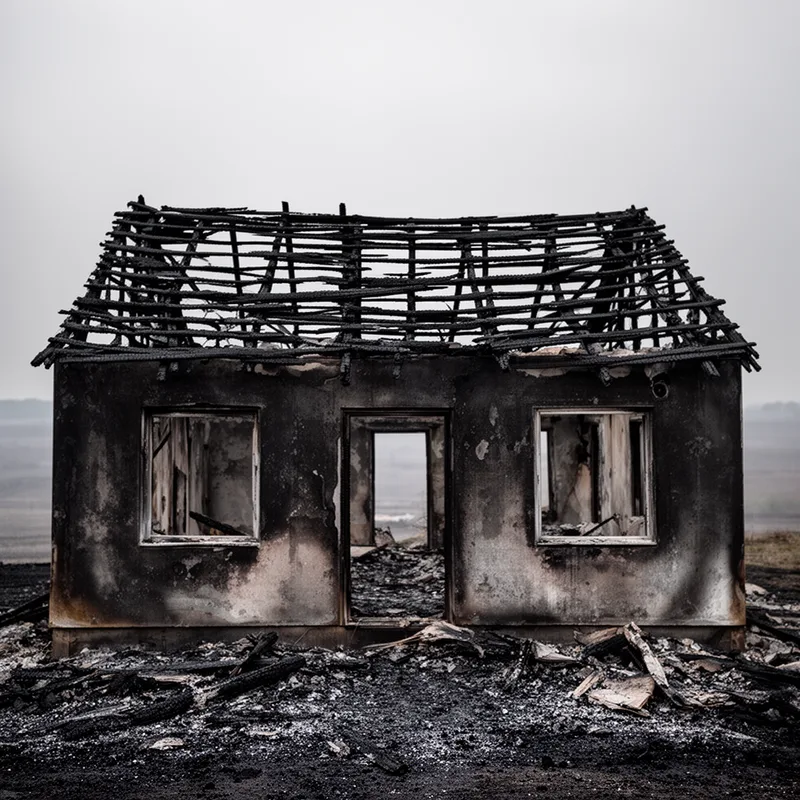
burned-out
 7
4.3
7
4.3

- adjective
- /ˈbɜrnˌdaʊt/
- US
- Then I see it, a burned-out house, its tin roof sliding quietly, effortlessly into the dirt.
- burned-out car
Loading YouTube…
Watch on YouTubeAnd it just looked like a Second World War, something like a real just battle scene and burned out cars.
- And it just looked like a Second World War, something like a real just battle scene and burned out cars.
Examples
-
The first indication of their deaths was the discovery of their burnt-out car.
Academic text (1996) -
All the debris and burned-out buildings had been cleared away.
Fiction book (1994) -
It's burned out and destroyed like the other towns around.
-
Detroit, lot of houses are burnt out right now.
-
Two wide shots of the street and uh, some close- ups inside the burned out houses
-
We used to play in burned-out buildings.
-
But the Bronx was where he had begun, in a building now gutted and burned out.
Fiction book (1995) -
If you look hard at these houses, you'll see that they are just empty shells, completely burned out by incendiaries.
-
His truck passed burned-out homes, baroque churches with rooftiles gone, and shards of glass in the street.
Fiction book (1996) -
Residents and rescue workers in Mati, east of Athens, searched through burned-out homes for loved ones.
Synonyms
 2
6.4
2
6.4
Completely destroyed by fire so nothing remains but burned pieces
 1
4.6
1
4.6
Burned and dried by strong heat such as fire or hot sun
 1
6.2
1
6.2
An area badly damaged by fire

Damaged by fire or very strong heat
Antonyms


How Burned

Surface Forms
Morphology
burned-out = burn out (transparent) = burn + out + ed
The past-participle adjective directly reflects the literal sense of the phrasal verb 'burn out' meaning 'consumed/destroyed by fire'.
Etymology
Burned-out originally means something the fire has completely burned until the flames are out and little is left. That's why a 'burned-out' building or car is one that has been badly damaged or reduced to ruins by fire.