
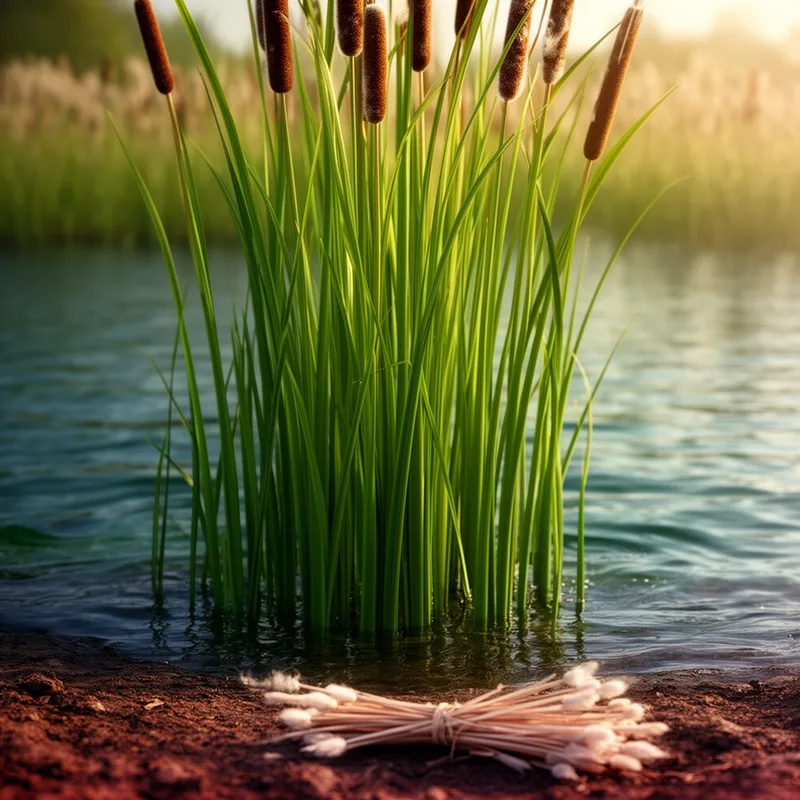
bulrush


 1
7.1
1
7.1
- noun
- /ˈbʌlˌrʌʃ/
- UK
- Its vegetation consists of moisture-loving plants, among them dark green bulrush, inland sea oats, grass-leaved goldenrod, and mistflower.
Examples
-
The craftsman skillfully wove a basket using long pieces of bulrush gathered from the nearby marsh.
-
Brackish marsh harbors robust stands of salt marsh cordgrass and seaside bulrush, which grow up to five feet tall.
Academic text (1998) -
Oddly, I pictured the infant Moses, afloat on the Nile in his bulrush boat.
Fiction book (1991) -
More than 144,000 individual plants representing 13 species were planted, including soft rush, common cattail, reed canary grass, and herstem bulrush.
Academic text (1996) -
"They lived on land they identified not as rocky, but as grassy: Waiilatpu -- 'place of the rye grass people' -- and they relied on this bulrush, known also as rule, for their baskets, some of their clothing, and their longhouse dwellings.
Academic text (2011) -
In ancient times, people made boats from bulrush to navigate the rivers and lakes.
-
The wetland was alive with the sound of birds, and clusters of bulrush swayed gently in the breeze.
Synonyms
 11
8.5
11
8.5
A tall marsh plant with a brown sausage-shaped seed head and long flat leaves used for making mats and seats

A tall plant with soft, round stems that grows in marshes and by ponds
A tall plant with many soft, upright stems that grows at the edges of ponds and marshes
A tall grass-like plant with soft upright stems that grows in wet places
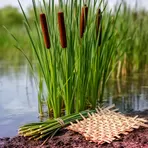
A tall plant that grows in wet places with long leaves and brown seed heads used to make mats

A tall marsh plant with long flat leaves and long brown seed heads used for weaving mats and chair seats
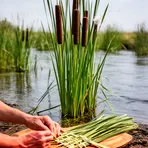
A tall marsh plant with long brown seed heads and flat leaves used for weaving

A tall marsh plant with long flat leaves and a brown seed head that releases fluffy down
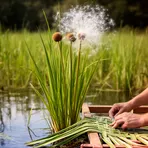
A tall plant that grows in wet places with round seed heads that burst and long leaves used for weaving
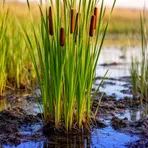
A plant that grows in soft wet ground like a reed or cattail
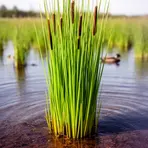
A tall marsh plant with stiff green stems that grows in water
Compounds
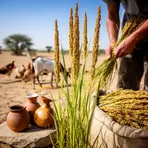
A tall grass grown in dry areas for its edible grain, animal feed, and brewing
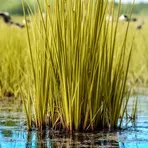
How Tall

Surface Forms
Etymology
The word bulrush can be remembered as bull + rush: the rush part is a common name for 'wetland plants' that grow in water, and thinking of a 'bull' gives a picture of a big, strong plant with thick stems that people used to make mats and baskets. So the name fits its meaning as a tall, sturdy plant from marshes and riverbanks.