
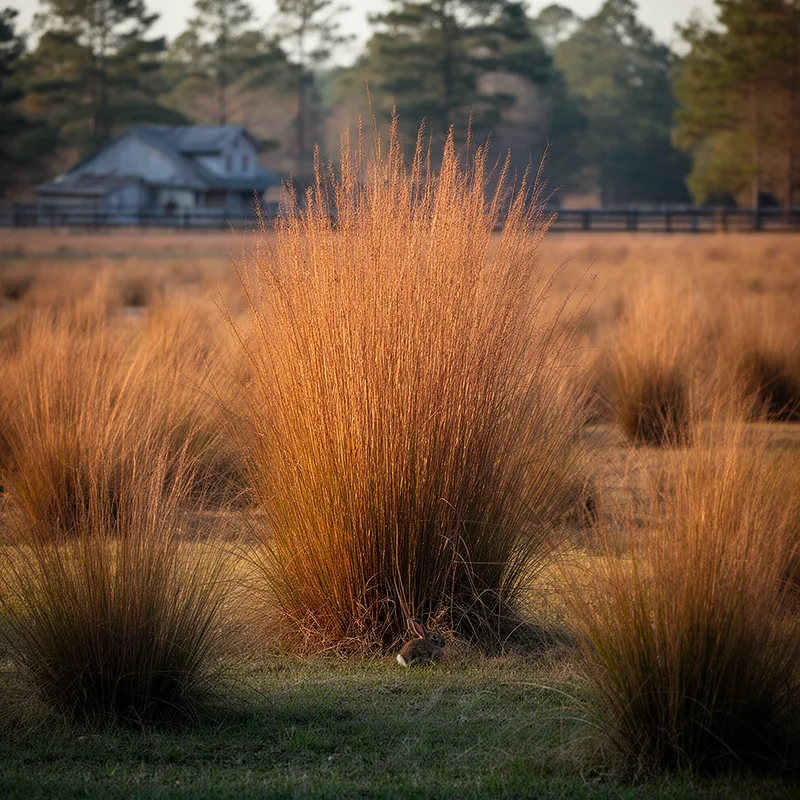
broom sedge
- noun
- US
- Local wildlife often uses broom sedge for cover during the winter months.
Examples
-
In the autumn, broom sedge turns a golden brown and stands out among other grasses.
-
The broom sedge swayed gently in the breeze.
-
The fields behind the farmhouse were overtaken by broom sedge as the years passed without farming.
-
Many broom sedges thrive in the warm climate of Georgia.
-
The fields were covered with broom sedge, creating a golden carpet as the sun set over the meadow.
-
Farmers often find broom sedge taking over old pastures if they're not regularly mowed.
-
During our hike, we spotted a tall patch of broom sedge, which swayed gently in the breeze.
Synonyms
A tall grass that grows in clumps in the southeastern United States and people call broomsedge

A coarse grass that grows in fields and pastures in the southeastern United States
Surface Forms
Morphology
broom + sedge
The noun–noun compound is compositional: 'broom' modifies 'sedge', indicating a type or variety of sedge associated with or resembling a broom, so the overall meaning 'a kind of tall tufted grass' is directly inferable from the constituents. This head-modifier pattern is a common and regular English compounding strategy (and found in many languages), making the expression transparent to a learner who knows both words.
Etymology
Broom sedge gets its name from old farmers who used the plant's stiff stems to make simple brooms, and sedge is a word for grass-like plants. Because it grows in tall clumps in fields, the name now means this tall, tufted grass.

