
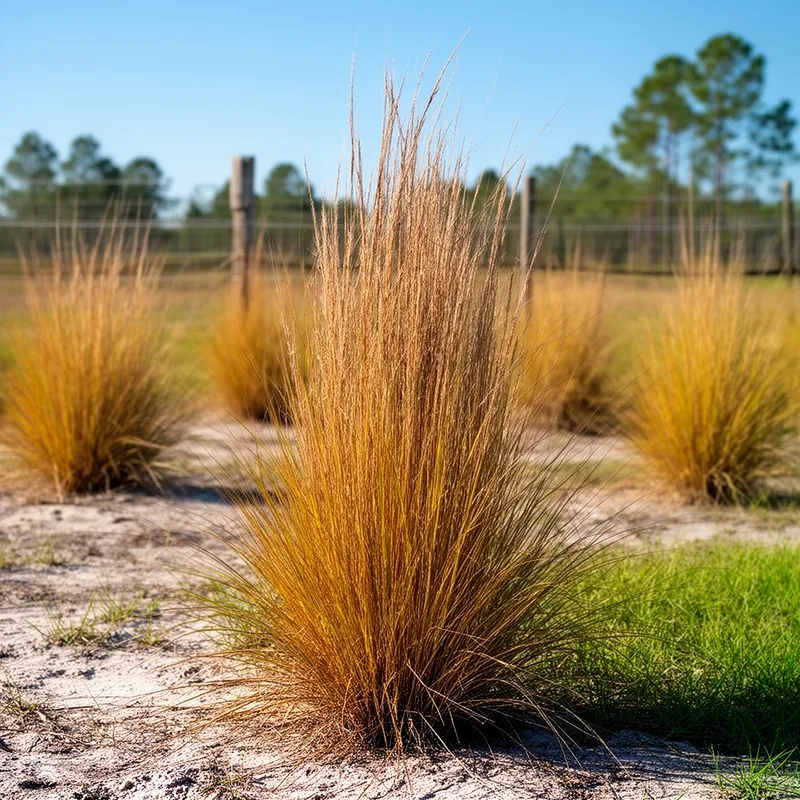
Andropogon virginicus
- noun
- Specialized
- Andropogon virginicus thrives in poor, sandy soils throughout the southeastern United States.
Examples
-
Fire can help manage fields overrun by Andropogon virginicus populations.
-
Many farmers use Andropogon virginicus for erosion control.
-
Farmers often remove Andropogon virginicus to improve the quality of their pastures.
-
The Andropogon virginicus grows abundantly in the fields.
-
Andropogon virginicus is a common sight in the fields of the southeastern United States, especially in poor soil conditions.
-
The tall Andropogon virginicus grass provides habitat for various wildlife in its native environment.
-
Gardeners often find Andropogon virginicus beneficial for improving soil health in their landscapes.
Synonyms

A tall grass that grows in many clumps in old fields in the southeastern United States

A coarse grass that grows in fields and pastures in the southeastern United States
Surface Forms
Morphology
Andropogon + virginicus
This is a Linnaean binomial: 'Andropogon' names a genus of grasses and 'virginicus' is a Latin epithet meaning 'of Virginia' (i.e., origin). Together they compositionally denote a particular species of Andropogon (a grass), so a learner who knows both constituents can infer the meaning.
Etymology
Andropogon virginicus gets its name from old Greek words: andro- meaning 'man' and -pogon meaning 'beard', because the plant's fluffy seed heads look like a beard, and 'virginicus' points to Virginia. So the name gives a simple picture of a tall, beard-like grass from Virginia.

