

to bray
 2
7.1
2
7.1

- verb
- /breɪ/
- One of them brayed, a harsh noise that sawed through the stillness of the morning, bouncing echoes from the yellowed buildings.
- donkeys bray
- mules bray
- camels bray
Examples
-
His eyes lit up, he laid back his ears, and, braying wildly, plunged into the fray.
Fiction book (1995) -
The donkey brayed loudly, echoing across the quiet countryside.
-
But a donkey brayed under her window, so she opened her eyes.
Fiction book (1995) -
The mules started to bray wildly.
Fiction book (1993) -
Our chickens began squawking in their coops and our camels were braying.
Fiction book (2001) -
The mules brayed in terror and the high-pitched whinnies of the horses screeched on the wind like a thousand hawks in full cry.
Fiction book (1994) -
As we approached the farm, we could hear the donkey braying in the barn.
-
When the children fed the donkey, it brayed with excitement.
Synonyms
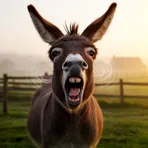
To make a loud, harsh braying sound like a donkey

A loud harsh sound that a donkey makes
Antonyms


How Loud

Surface Forms
Etymology
Bray as a verb comes from the same sound imitation and the Old French braire meaning 'to bray', so to bray is to make that loud, harsh donkey sound.