
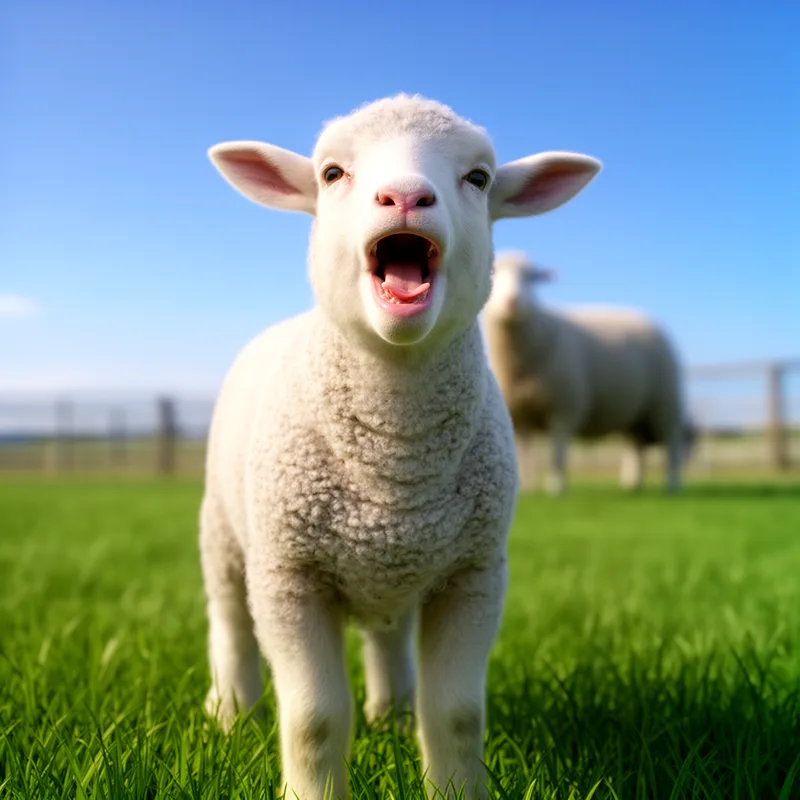
to bleat
 5
6.0
5
6.0

- verb
- /blit/
- And press up to the side of the fence and look for me and bleat that way.
- goat bleated
- sheep bleated
- lamb bleated
Examples
-
In a small pen farther off, moving restlessly and bleating anxiously, was a herd of piebald goats.
Fiction book (1991) -
The hired men, most of them, bleated with alarm.
Fiction book (1995) -
The lamb bleated again, and then his mother began to call.
Fiction book (1999) -
- It's covered in wool and it bleats.
-
The goat arrived, and D'Cey walked the bleating animal back to the original kill site at the edge of the Iron Wood.
Fiction book (2000) -
The poor creature bleated pathetically when it saw Lefarn.
Fiction book (2001) -
Soon, twenty mischievous goats trotted through the gate, bleating plaintively.
Fiction book (1998) -
The little lamb bleats whenever it feels hungry.
-
As we walked by the farm, we could hear the goats bleating for their feed.
-
The young goat bleated plaintively when it was separated from its mother.
Synonyms


How Loud

Surface Forms
Etymology
The word bleat first named the wavering cry of a sheep or goat, a sound like 'baa', and people then used it for someone making a weak, sad noise. So to bleat can mean an animal crying or a person complaining in a weak voice.